





Digital PR is a marketing technique that gets your brand mentioned on high-value websites, news, and blogs by sharing valuable stories or content to earn backlinks and build authority.
It works like this: You create something worth covering. It could be a study, a story, a strong opinion, or a campaign. Then you pitch it to the journalists and editors who write for publications your audience reads. When they cover it, you get a mention, usually a link, and exposure to their readership.
That link is one of the main reasons businesses invest in digital PR. Every link from a credible publication signals to Google that your site is trustworthy, which, over time, improves where you rank in search results.
So, digital PR does two things at once:
- It builds your brand in the eyes of real people, and
- It builds your site's authority in the eyes of search engines.
How Is Digital PR Different from Traditional PR?
Traditional PR is about getting your name seen: mentions in media, views, and general awareness, but it’s hard to measure what you get from it. Digital PR is different because you can track real results. You get backlinks, website visits, and better rankings in Google, and you can see exactly where they come from.
So, the main difference is simple: Traditional PR shows visibility. Digital PR shows clear, measurable results that keep building over time.
How Is Digital PR Different from Link Building?
Link building means you ask for a link and get it placed on a website. Digital PR means a website links to you because they chose to cover your story.
In link building, you control the process since you pick the site, reach out, and secure the link. In digital PR, you don’t control the placement: you create something valuable, pitch it, and journalists decide to publish and link to it.
In short, link building is placing links; the other is organically earning them because of the value of the story/content you provide. Search engines treat earned links as more trustworthy and more impactful.
Benefits of Digital Pr and How it Helps SEO?
Digital PR improves SEO by earning high-quality links and attention from real websites. Those send strong signals to search engines that your site is trusted, relevant, and worth ranking higher.
It Builds Backlinks from Real Publications
When a trusted publication links to your site, it acts as a strong signal of credibility. These links sit inside real articles, written by editors, on sites that already have authority and relevant audiences.
That context matters for Google and AI search engines as well. A link from a news site or industry blog carries far more weight than a random directory or comment section because it’s editorial, intentional, and placed where the right audience reads.
It Grows Your Domain Authority Over Time
Each quality link adds to your site’s overall credibility. One link won’t change much, but consistent coverage builds momentum. Over a few months, you may start seeing ranking improvements. Over longer periods, this compounds into stronger authority, better keyword positions, and more stable traffic.
It Drives Referral Traffic That Converts
People who click through from a trusted article already have context and trust. They came from a source they believe in. For example, if a SaaS company gets featured in a trusted industry publication, readers who click that link already understand the product category and the problem it solves. That usually leads to higher engagement and better conversion rates compared to cold traffic.
Types of Digital PR Strategies
Inside digital PR, there are a few key strategies and approaches used by top agencies. Let’s go through them one by one, with real examples of how they work in practice.
Data-Driven Digital PR
Data-driven digital PR is creating original, newsworthy data (surveys, reports, or analysis) and pitching it to journalists as a source they can cite.
Why does data-driven digital PR work:
Journalists need new data to support their stories, but most available data is already used everywhere. If you provide something original, especially data no one else has (using your internal data, let’s say), you give them a fresh angle they can’t get anywhere else. That makes your content worth covering.
How does data-driven digital PR work:
- You find a topic journalists already cover related to your industry/niche/product
- Collect unique data (survey, internal data, or new analysis)
- Turn it into clear, simple findings
- Pitch those findings as a story
- Journalists use your data and link back to your website as the source
Real-life example of data-driven Digital PR:
Let me give you a quick example from one of our legal clients. They wanted to rank for a highly competitive term, but had zero presence in major publications.
We noticed something simple: everyone talks about crime in the U.S., but no one had ranked cities using clean, comparable data. So we analyzed FBI data and turned it into a clear ranking with a strong headline. That one campaign got picked up by MSN, Yahoo News, and 20+ regional outlets, earning 35 high-authority backlinks and putting the brand in front of the right audience.
Newsjacking/Reactive PR
Newsjacking is adding your insight or data to a breaking news story while it’s still trending. It’s a type of reactive PR, which is responding to journalists’ requests for expert input and getting quoted in their articles.
Why does newsjacking work:
When a story is trending, journalists are actively updating their coverage and looking for new angles and insights to support it. If you can add a relevant insight quickly, you become part of the story while demand for content is highest.
How does newsjacking work:
- You monitor daily news in your space
- Identify a story you can add to
- Create a quick insight, stat, or expert take
- Pitch within hours
- Get included in ongoing coverage
Note: The reactive PR process is the same.
Real-life example of newsjacking:
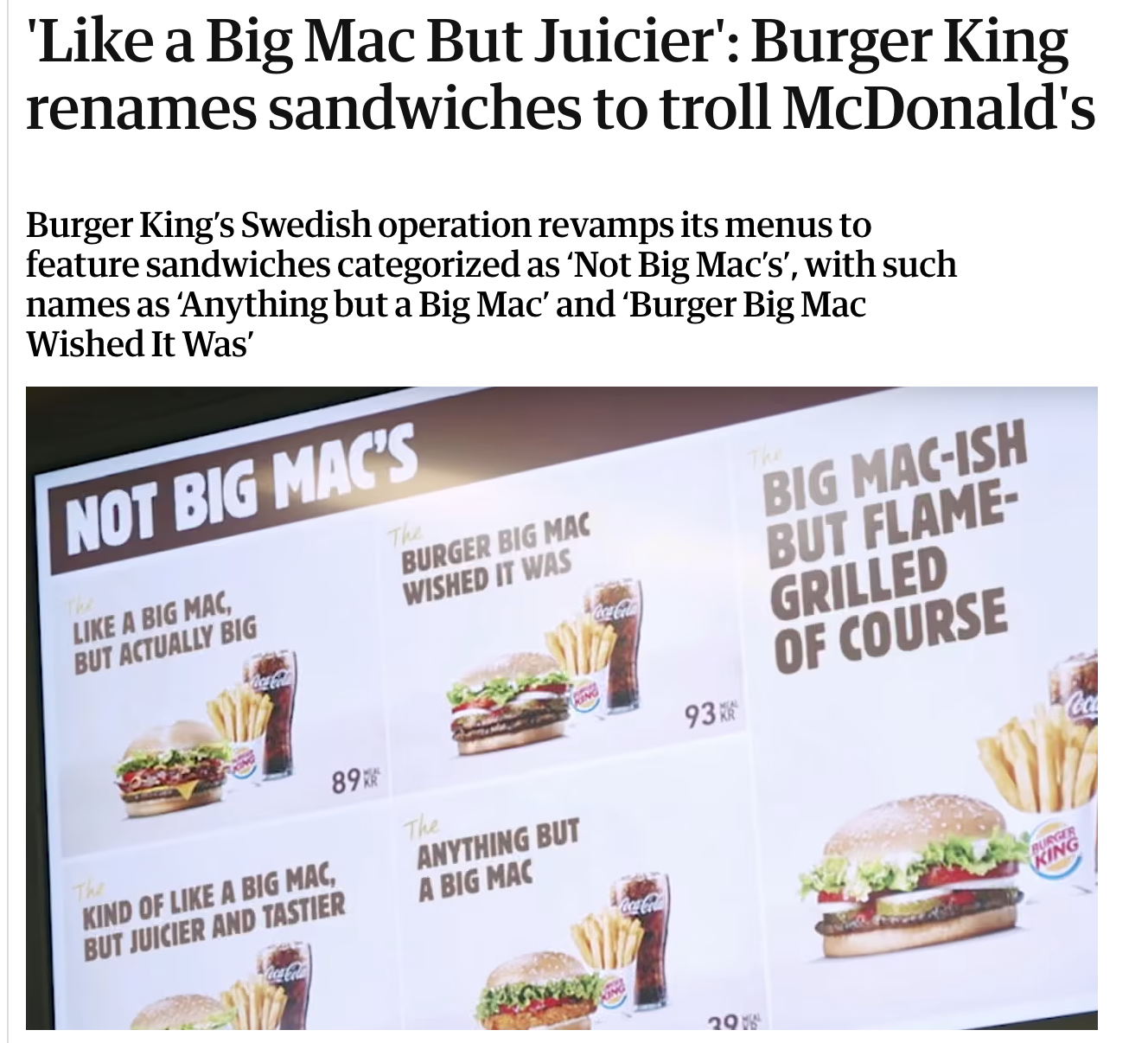
When McDonald’s lost exclusive rights to the “Big Mac” trademark in parts of Europe, Burger King reacted instantly. They rolled out playful menu names referencing the situation. This turned the legal update into a marketing moment because it directly tied into a trending story. Outlets like The Washington Post and Highsnobiety covered it.
Expert Commentary
Expert commentary PR is positioning a specific person as a reliable source journalists can quote on a topic.
Why does expert commentary work:
Journalists prefer quoting real experts, and if someone consistently provides clear, strong opinions, they become a trusted source journalists return to.
How does expert commentary work:
You define a clear area of expertise and develop strong, opinion-based insights around it. From there, there are two ways this plays out:
- You proactively reach out. Identify relevant journalists, editors, and publications, and pitch your insights directly to them.
- Or you respond to demand. Journalists post requests for expert input, and you reply with ready-to-use quotes.
Real-life example of expert commentary:
For one campaign, we saw a spike in searches for unusual weight-loss methods, especially the “ice hack.” Instead of just reporting the trend, we brought in fitness experts to explain what’s real and what’s not. We backed it with search data and turned it into clear, expert-led answers to the most searched questions. That combination of trend + expert insight led to 45+ placements in outlets like The Mercury, Ravish Mag, and PressReader.

Content Partnership
Content partnership is co-creating useful content with another platform and distributing it together.
Why does content partnership work:
You combine audiences and credibility. The partner brings distribution, and you bring content or data, which makes the content more likely to be picked up and linked to.
How does content partnership work:
- You partner with a relevant publication or platform
- Create a joint report or content piece
- Publish across both audiences
- Pitch it as a collaborative story
- Earn links from coverage
Real-life example of content partnership:
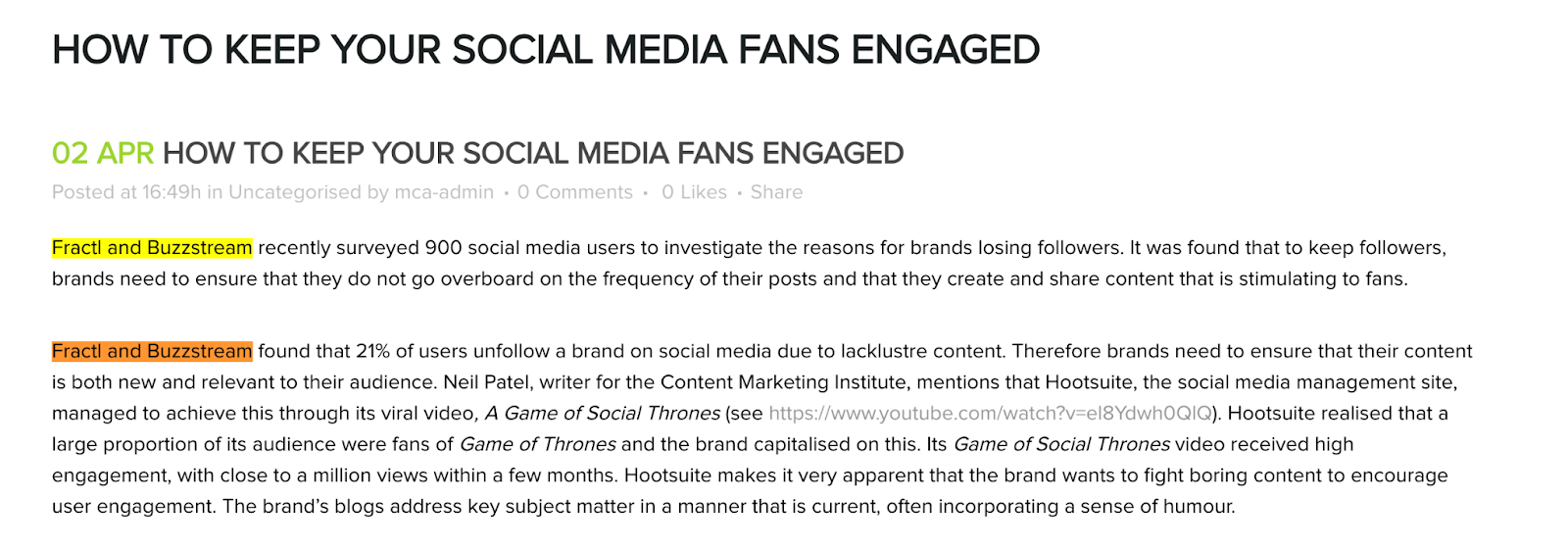
Fractl partnered with BuzzStream to run a series of research campaigns. Fractl handled the research and content, while BuzzStream provided the audience and distribution. Because both brands were behind it, the content had immediate reach and credibility. That led to 320+ media placements and helped BuzzStream drive new sign-ups. The key point: the results came from combining resources, not just creating content.
Strategic Press Releases
Strategic press releases are targeted announcements built around real news value and sent to relevant journalists.
Why do strategic press releases work:
Journalists cover what’s new and relevant. If your announcement has a strong angle and is not just “we launched something,” but focuses also on why it matters, its industry value, and more, journalists will turn it into a story.
How do strategic press releases work:
- You identify real news (funding, launch, data)
- Add a clear angle or hook
- Send to a targeted journalist list
- Follow up with tailored pitches
- Secure coverage and links
Real-life example of strategic press releases:
In 2011, Patagonia launched a campaign on Black Friday with a simple message: “Don’t buy this jacket.” While most brands were pushing sales, Patagonia used that moment to talk about overconsumption and sustainability. Even though it was launched as a campaign, it functioned like a strategic press release, with a clear message, strong timing, and broader context. The media picked it up widely because it was a story people were already thinking about, instead of a jacket campaign.

What Is NOT Digital PR?
Digital PR is not buying links, not paying for fake editorial, and not sending mass, untargeted pitches:
- Buying links: Paying a site to place your link is not digital PR. It violates Google’s guidelines and can lead to ranking drops once detected.
- Paid placements presented as editorial: If coverage is paid, it must be labeled as such. If it’s made to look like independent editorial, it’s not trusted by readers or search engines, and often gets ignored in rankings.
- Mass email outreach with no targeting: Sending the same pitch to hundreds of journalists is not digital PR. It gets ignored, damages your credibility, and rarely results in real coverage.
How Long Does Digital PR Take to Show Results?
You should expect 3-6 months to see a meaningful SEO impact. You can get coverage and backlinks within weeks of launching a campaign, but rankings may not move that fast. Authority builds over time as those links get indexed and start influencing your site.
How Do You Measure Digital PR Results?
You can track the following digital PR metrics:
How Do You Start a Digital PR Campaign?
To start a digital PR campaign, you move step by step:
Step 1. Define a clear goal
Start with what you want to achieve, a specific goal. Do you want stronger backlinks? Authority in a niche? Visibility in certain publications? Everything you do next depends on this. If the goal is vague, the campaign will be too.
Step 2. Understand your industry and media
Before creating anything, look at what’s already being covered. Find journalists and publications in your space. Read their articles. Notice what topics they write about, what angles they use, and what gets repeated. This is where you start seeing patterns, what works and what doesn’t.
Step 3. Analyze competitors
Look at who’s already getting coverage. Where are they getting links from? Which publications mention them? What kind of stories get picked up? This gives you a practical starting point—both for ideas and for building your media list.
Step 4. Develop a newsworthy angle
This is the most important step. Ask yourself: why would anyone publish this right now? A strong angle usually has at least one of these:
- It’s timely (connected to something happening now)
- It’s new (not already covered everywhere)
- It’s useful or surprising
- It has a clear headline
Step 5. Create the asset
Once the angle is clear, build something around it. That could be data, a ranking, expert insight, or a campaign. The format doesn’t matter as much as the clarity of the idea.
Step 6. Build a targeted media list
Now you decide who should see this. Create a list of journalists, editors, and publications that cover this topic. You can do it manually or use tools like Muck Rack. The key is relevance.
Step 7. Write and send your pitch
Your pitch should be simple:
- One line about why this matters to them.
- One-two lines about what the story is.
- One line about what you’re offering (data, quote, access).
Then you send it to the right journalists and wait for a response.
Frequently Asked Questions
How Is Digital PR Different from Content Marketing?
Content marketing is published on your own channels - your blog, social, and email. Digital PR gets you featured on other platforms. One builds owned content, the other builds external credibility.
How Is Digital PR Different from Social Media Marketing?
Social media focuses on your existing or potential audience on social media channels. Digital PR puts you in front of new audiences through third-party publications.
Does Digital PR Work for Small Businesses?
Yes. Smaller businesses often do well because they can move faster and focus on specific angles - local stories, niche data, or unique insights. Journalists care about the story, not the company size.
Can Digital PR Hurt My SEO?
Only if you’re buying links or getting coverage from low-quality sites. Real editorial coverage doesn’t hurt your SEO.
Build Your Digital PR Strategy
To execute digital PR properly, you need a clear system, the right media contacts, and people who know how to turn ideas into stories that get picked up.
If you want help with that, our digital PR agency has worked on some of the highest-performing digital PR campaigns across industries. Get in touch, and we’ll look at your goals and map out what it takes to make you a visible, trusted name in your space.

