





The right way to measure a digital PR campaign starts with one question: what was this campaign supposed to do? A reactive newsjacking piece and a data-led SEO campaign have different goals, so you shouldn’t assess the same numbers for both.
At Digital PR Agency, we've run campaigns across 200+ clients in even the most regulated industries. The measurement framework we use isn't the same for every client - it's built around the campaign goal. Below is how we think about it, and how to pull the data.
Match Your Metrics to Your Goal Before You Track Anything
There are three goals digital PR can help achieve, so you need to match what you track to them:
Trying to report on all twelve metrics for a campaign designed only to build links makes the report longer and the argument weaker. Lead with what the campaign was for.
Below, I'll outline the key metrics, tools, and methods for tracking each one, so by the end you’ll know how to measure your digital PR campaign for any goal.
How to Measure SEO and Link Building Metrics for Digital PR?
The first key area digital PR is used for is Search Engine Optimization (SEO), and you need to track at least four metrics to see if it’s working.
Quality Backlinks
Backlinks are the baseline metric. Clients and stakeholders expect them, and they drive most of the other metrics on this list. And the number that matters most here is how many good links you got, not just how many you got.
A quality link means:
- high domain rating (DR 50+),
- real organic traffic to the linking page,
- topical relevance to your brand, and
- a followed link.
To measure it, you can use Ahrefs’ Backlinks inside Site Explorer. Set it to dofollow, apply a DR threshold and a minimum traffic floor, and the number you report drops from 45 to 7.
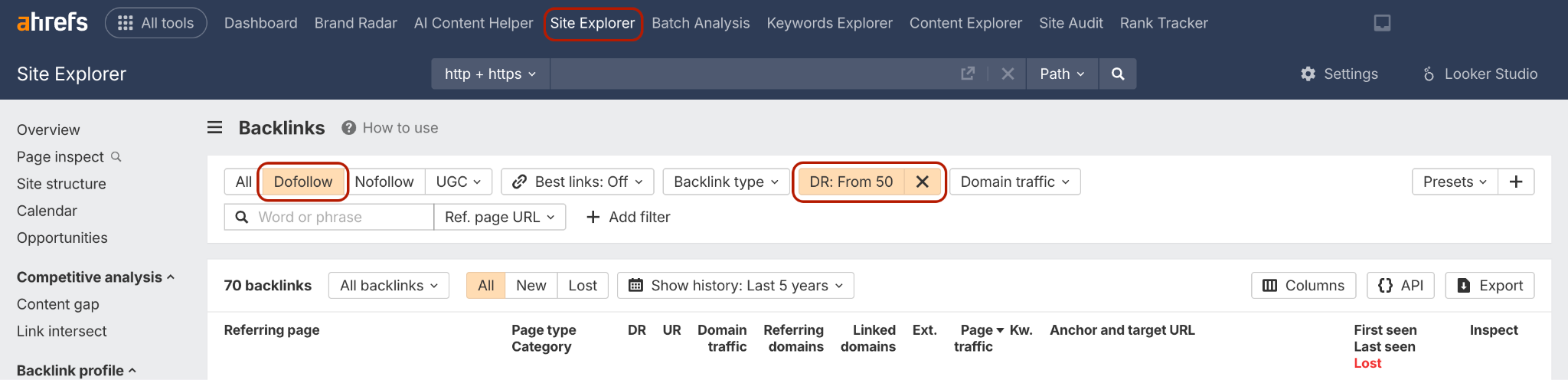
That's the honest number, and it's a stronger argument.
Track in: Ahrefs Site Explorer (Backlinks)
Referral Traffic
Referral traffic tells you real people clicked through from coverage to your site. It's the most direct way to show a placement reached an audience.
Links on news sites spike on publication day and taper off within days - that's how news sites work. The longer-term referral traffic comes from links on pages with search volume: resource pages, roundups, "best of" lists. Those send traffic for months.
You can see it in your GA4’s Acquisition report, under Traffic acquisition.

You can add "session source/medium" as a secondary dimension, filter by referral. Cross-reference specific domains with Ahrefs to attribute traffic to individual placements.
Track in: GA4 + Ahrefs
Keyword Rankings and Organic Traffic
If a campaign is built around a specific asset, like a data study, a tool, or a resource page, track that page's keyword rankings and organic traffic separately. This is where you show the compounding SEO value of the links you earned.
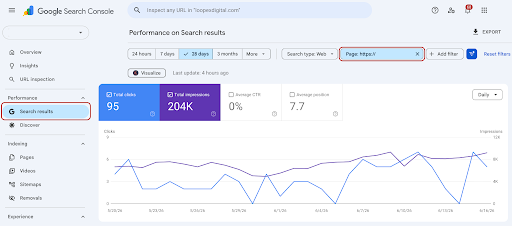
Google Search Console is the most reliable source. Go to Search Results and filter by adding a URL to your target page. You can see the total clicks, impressions, average CTR, and average position over time.
Track in: Ahrefs Site Explorer (Overview)
How to Measure Brand Awareness Metrics for Digital PR?
In many companies, digital PR is useful for brand building and awareness; so, it’s important to know how to measure it properly.
Branded Search Volume
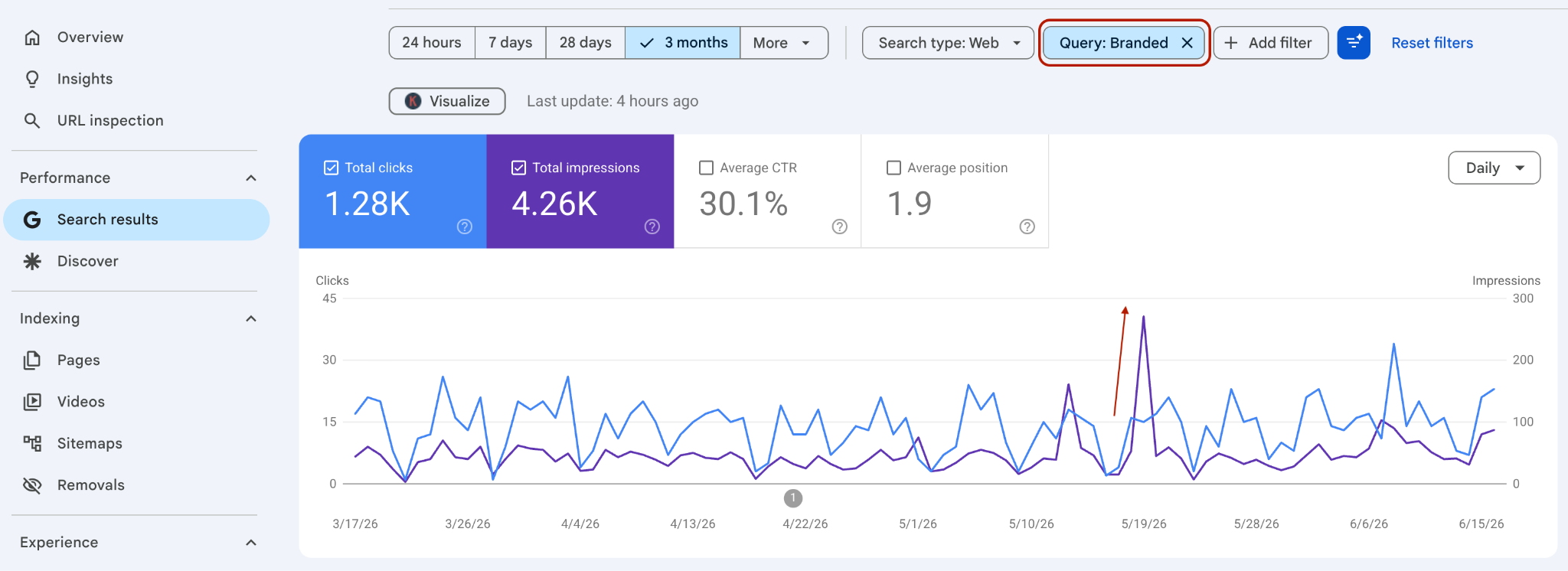
When coverage generates real awareness, people search for your brand name directly. That shows up in Google Search Console.
You can again check this under Performance and Search Results - filter queries to include your brand name, and look at the impressions trend over the campaign period. A major placement will typically produce a spike in branded impressions within days.
For SaaS brands: filter out navigational queries (/login, /dashboard page paths in GA4) before reporting. Users typing your brand name to log into their account is not a PR outcome.
Google Trends works as a directional check if you don't have GSC access, and for comparing brand interest against competitors.
Track in: Google Search Console, Google Trends
Brand Mentions (Linked and Unlinked)
An unlinked mention in a high-authority publication still matters, especially for digital PR’s effect on GEO. Besides that, it builds brand familiarity, can trigger direct traffic, and can often be converted into a backlink with a single outreach email.
Set up Talkwalker Alerts for your brand name, key executives, and any campaign asset names. It's free, comes through email, and catches most web and news coverage. It misses paywalled content and some social platforms, but it's enough for baseline tracking.
For enterprise clients or those reporting to a board, Brandwatch or Cision give historical data, sentiment scoring, and source filtering.
When you spot a spike in mentions, check GA4 direct traffic for the same date range. That correlation (coverage goes up, direct traffic follows) is one of the cleaner ways to prove unlinked coverage drives real behavior.
Track in: Talkwalker Alerts (free), Brandwatch or Cision (paid)
Share of Voice
Share of voice measures the percentage of the conversation in your space that your brand owns compared to direct competitors. This is really important for comparative analysis.
To calculate it manually, you can use this simple formula:
- (your brand mentions ÷ total mentions across all tracked competitors) × 100
Define the competitor set up front and track all of them in the same tool over the same window.
Most media monitoring platforms (Meltwater, Brandwatch, Cision) do this automatically if you've set up a competitor tracking project. For free tools, export Talkwalker mention counts for each brand and run the formula in a spreadsheet.
Track in: Meltwater, Brandwatch, Cision, or manual export from Talkwalker.
Sentiment
For this, you should look for patterns. One negative article is noise, but a negative sentiment trend across three months is a signal.
For companies in finance, legal, or healthcare, sentiment is often the primary measurement framework - one damaging narrative can outweigh a dozen positive placements.
Cision and Brandwatch produce sentiment reports automatically.
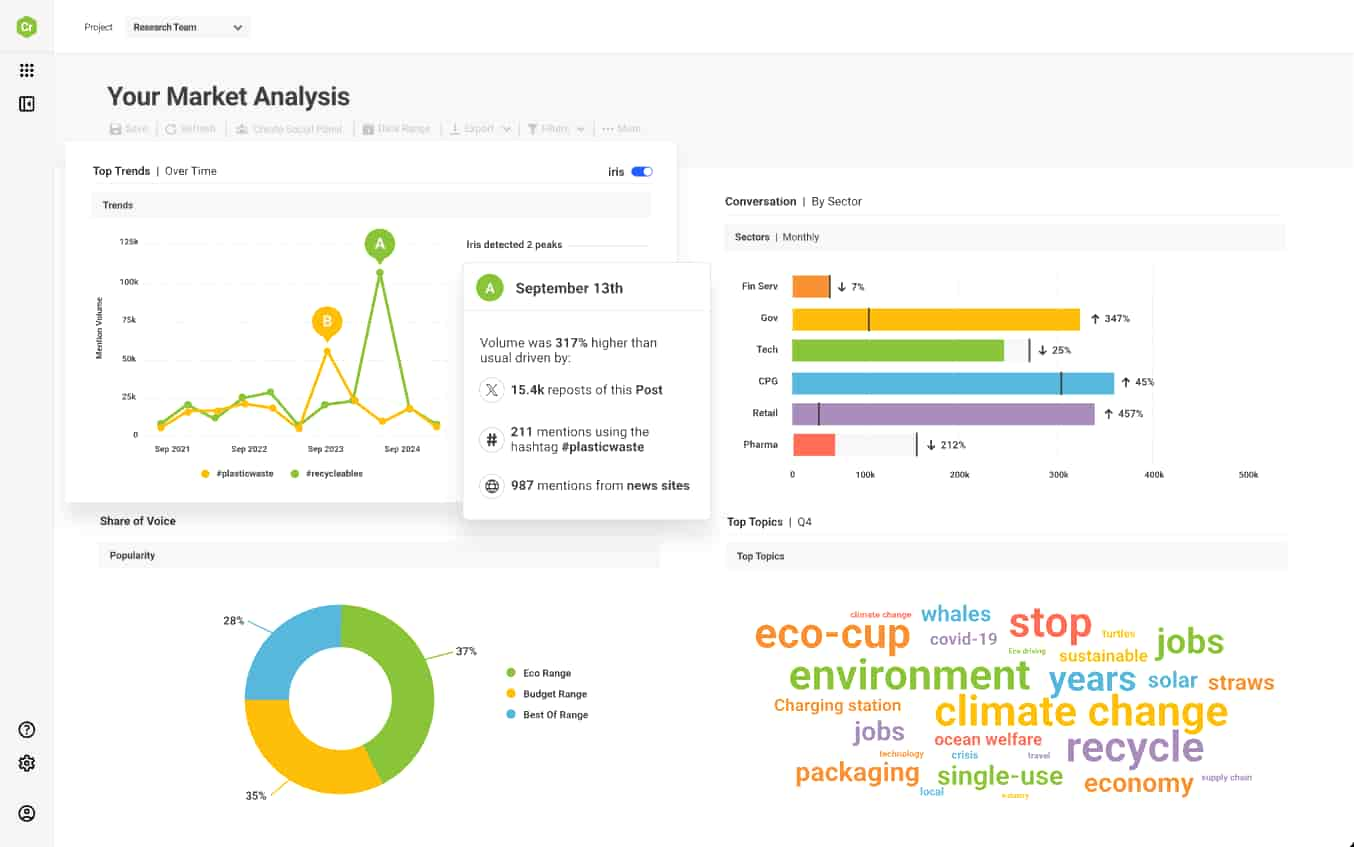
For free tracking, manually code a sample of mentions from your Talkwalker export (positive/neutral/negative) and present that as your breakdown.
Track in: Brandwatch, Cision, or manual coding from Talkwalker export
AI Citations
With a growing share of queries now surfacing in AI Overviews, Perplexity, and ChatGPT, your brand can gain real visibility without traditional search rankings or trackable referral clicks. AI-referred users often arrive as direct traffic - they copy a URL from an AI answer and paste it into their browser.
The manual method: build 15-20 queries your target audience would ask an AI tool. Run them monthly across ChatGPT, Perplexity, and Google AI Overviews. Note whether your brand appears, how it's described, and whether specific content is being cited. Track changes month to month.
For clients who need this tracked at scale, Profound and Peec AI are the tools worth evaluating. Both are still early-stage, but they're ahead of anything else currently available.
Since June 2026, Google Search Console has also been showing Generative AI reports, but the features are still limited.
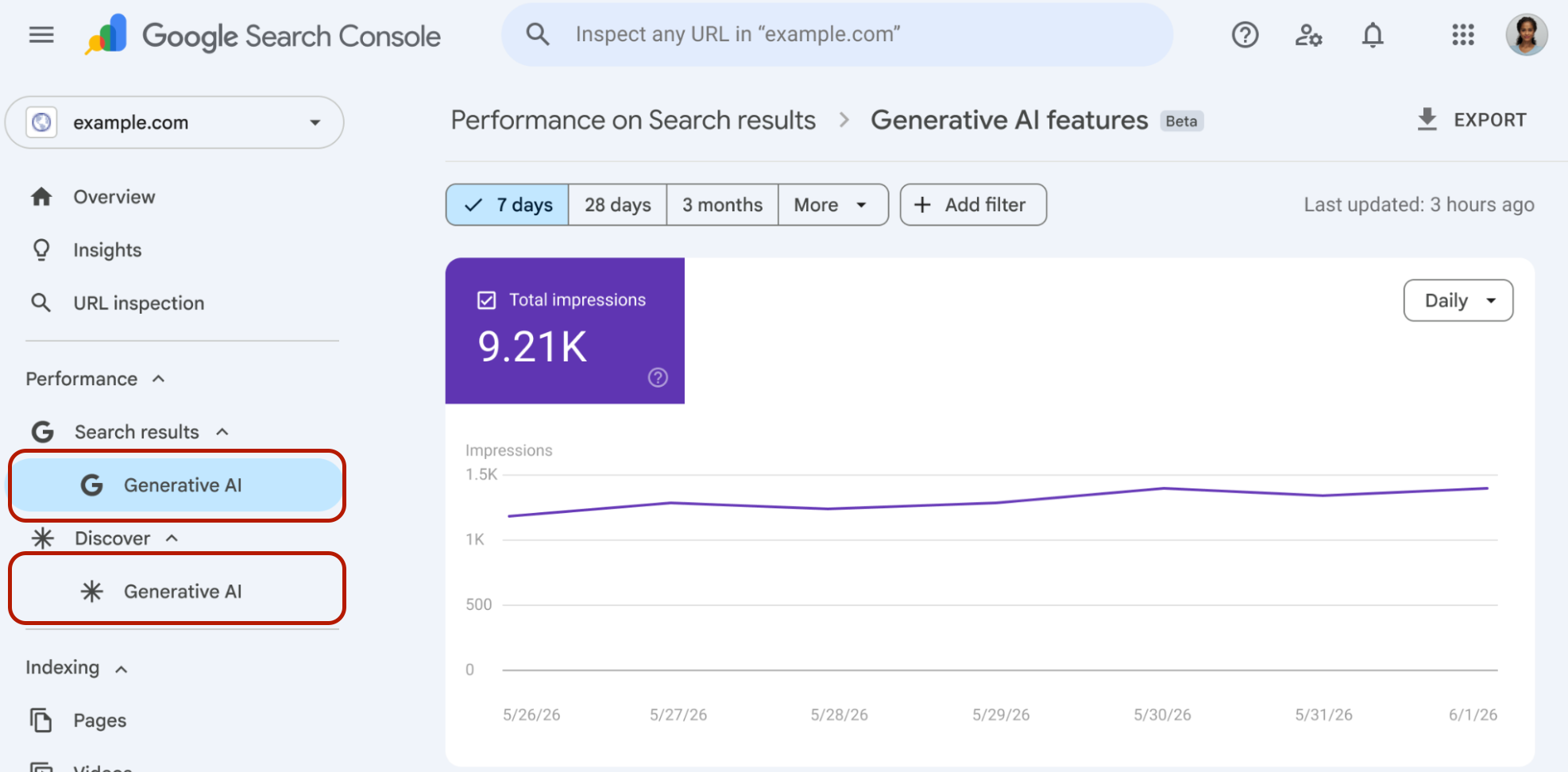
We're building AI citation goals into campaigns at our agency - particularly for clients in competitive informational spaces where AI is now the first point of contact for their potential customers. That’s why digital PR for iGaming and similar industries starts to prioritize AI search.
Track in: Manual prompt testing (ChatGPT, Perplexity, Google AI Overviews), Profound, Peec AI, Google Search Console
How to Measure Conversion Metrics for Digital PR?
A marketer’s favorite result is always a conversion,
Direct Traffic
Direct traffic is users who typed your URL or visited from a bookmark. It spikes when coverage lands well. It's the clearest sign of brand recall from a campaign.
For SaaS brands, filter out login and app page paths (/login, /dashboard) in GA4 before reporting. What's left is much closer to the awareness-driven traffic you actually want to measure.
Compare the trend against campaign publish dates. A national placement or a high-engagement social moment will show up within 24-72 hours.
Track in: GA4 (Acquisition > Traffic acquisition > Direct channel)
Leads and Conversions
The content that earns the most links is usually not the content that converts immediately. A data-led research study on industry trends won't turn a reader into a customer on the spot. But that doesn’t mean it’s a failure; it's just a different part of the funnel.
The way to trace PR's contribution: set up Key Events in GA4 for your conversion goals (form submissions, pricing page visits, free trial signups, our purchases).
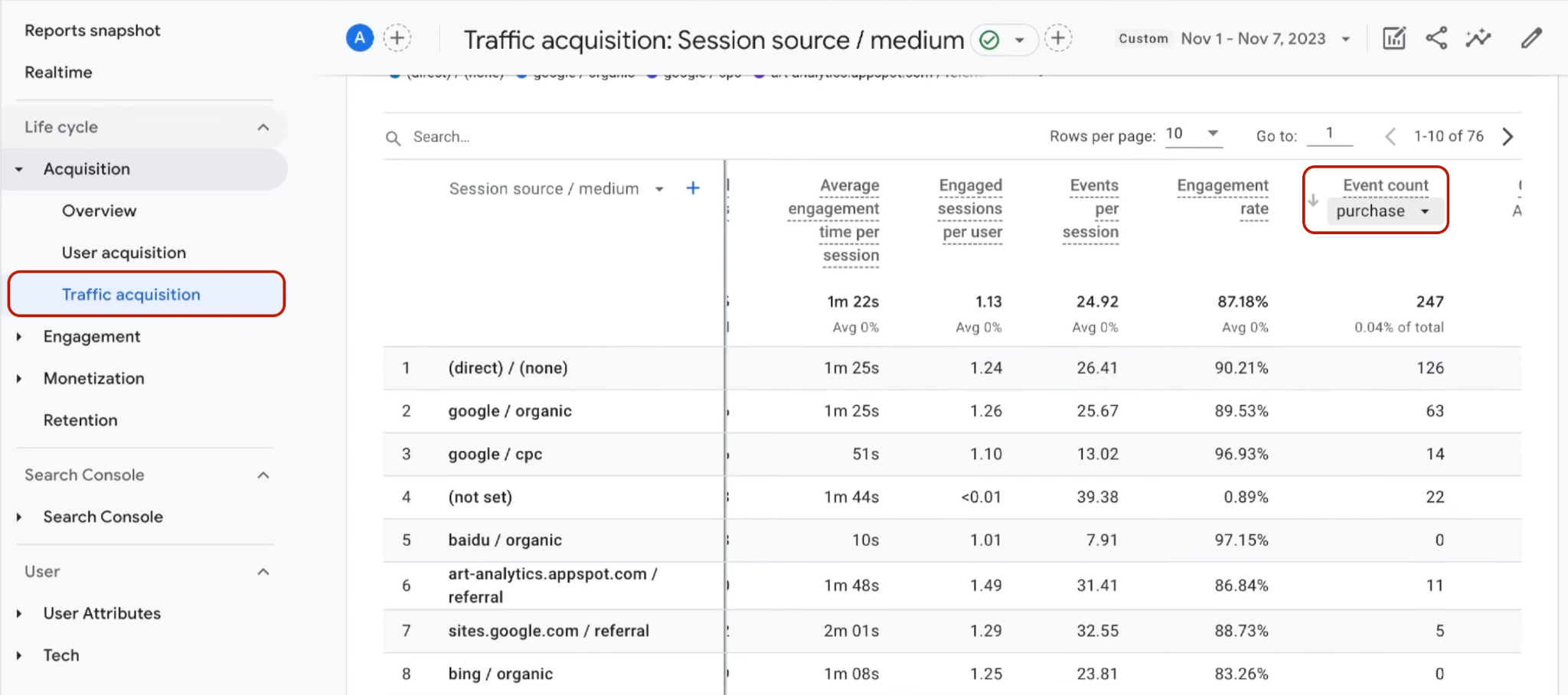
Then use the Landing page report, filtered to organic and referral sessions, and cross-reference it with Key Events. You can see which campaign pages are starting user journeys that eventually end in a conversion.
For ecommerce, affiliate tracking at the individual placement level can tie media coverage directly to purchase events, which is how we've demonstrated clear revenue attribution in our ecommerce client case.
The macro argument for stakeholders: links raise domain authority, which improves rankings on commercial pages, which increases conversion volume over 6-12 months. That's a real outcome - but it requires setting the timeline expectation before the campaign starts.
Track in: GA4 Key Events, GA4 Landing page report
Social Traffic
In GA4, social media referral traffic is labeled "Organic Social" in the channel grouping. Go to Acquisition > Traffic Acquisition, find Organic Social, add Session source as a secondary dimension to see platform breakdown.
Cross-reference spikes against coverage dates and social mention data. For B2B campaigns targeting a professional audience, LinkedIn's own analytics (follower growth, post reach, engagement rate) are worth including as secondary metrics.
Track in: GA4, LinkedIn Analytics, Talkwalker
Tools to Measure Digital PR Campaigns (At a Glance)
If the budget is limited, GA4 + Google Search Console + Talkwalker Alerts + Google Trends cover the core of most campaigns without any paid tools.
What to Include In a Digital PR Stakeholder Report
Lead with the metrics that match the digital PR campaign goal:
- SEO campaign: Lead with link quality (DR, traffic, relevance), referral traffic trend, ranking movement on the target asset. Secondary: DR progress over the quarter.
- Brand awareness campaign: Lead with branded search lift and mention volume in SOV context. Secondary: direct traffic correlation, sentiment split.
- Conversion campaign: Lead with Goal Events and revenue attribution where possible. Secondary: organic traffic to commercial pages, referral-to-conversion path.
Cut these from every report: raw impression counts without context, total link count as the headline number, and any metric that moved for reasons unrelated to the campaign (algorithm updates, competitor news, seasonality - flag these as confounding factors instead).
Timeline expectations - give these to clients before the campaign starts:
The 30-day mark is when most clients start questioning the campaign. The ones who don't are the ones who were given this table before it started.
Key Takeaway: How to Measure Digital PR Campaigns?
Measure a digital PR campaign by what it was meant to do: SEO, brand visibility, or conversion. Once you know the goal, set up a tracking system and goals for each metric, and establish timeline expectations before the campaign starts.
If you need help in planning, executing, and measuring your (or your clients’) digital PR campaigns, jump on a free strategy call with us and let’s work together.

