


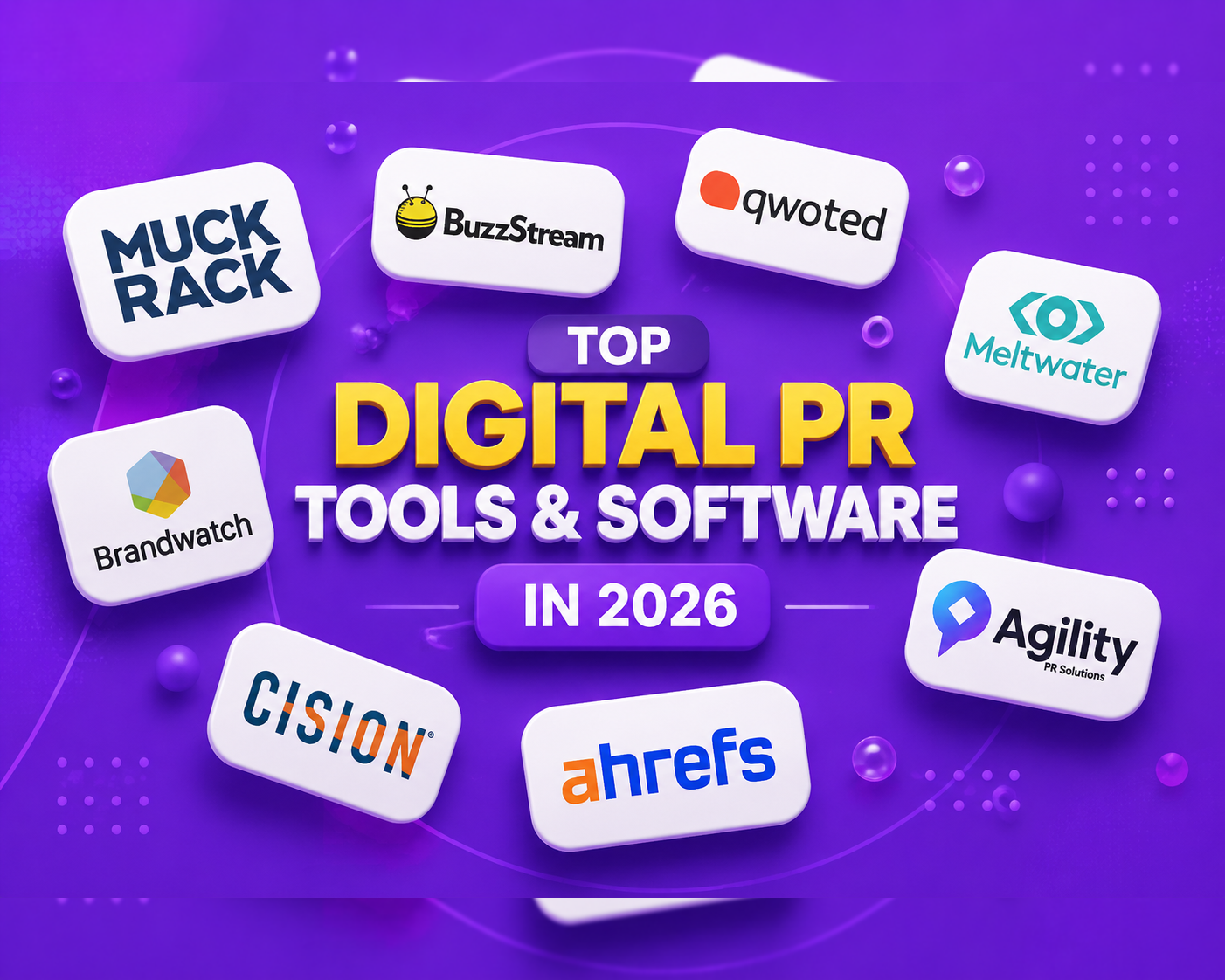
I’ve used 40+ digital PR tools and software over my career, and some I would never use again, while others remain in my workflow to this day. I’ve collected them all, added new ones to the list, tested them again, and compiled this list of tools you can start using today to make your digital PR work simpler (and more enjoyable).
I’ll cover which types of tools you need, which ones win in each category, how to build a stack that fits your team size, and what you should measure.
Short Explanation: Digital PR tools are not the same as PR tools
This distinction matters because digital PR tools are unrelated to enterprise crisis monitoring suites, press release wire services, or internal comms platforms.
Digital PR is its own discipline - earning online coverage, building backlinks from authoritative publications, and growing brand visibility where it counts for SEO. It sits at the intersection of PR, content marketing, and search.
Traditional PR is different from digital PR. Traditional PR tools are built around press release distribution, broadcast monitoring, and offline reputation management. Digital PR tools are built around journalist relationships, link-building workflows, and online coverage analytics. There's overlap, but the use cases are different enough that the tooling matters.
The 3 Types of Digital PR Tools
Before you look at specific platforms, let’s understand what types exist (and which type you need), to save you some time in later stages:
Outreach and Journalist Database Tools
These are your primary campaign execution tools. They help you find the right journalists for a story, build targeted media lists, manage email sequences, and track who opened your pitch, who responded, and who covered it. Without one of these, you're running outreach from a spreadsheet, which works at low volume but doesn't scale.
Media Monitoring and Analytics Tools
These track your coverage after it lands. Share of voice against competitors, sentiment around your brand, where your brand is being mentioned (including without a link), and whether your campaigns are shifting perception over time. Essential for client reporting and for identifying reactive PR opportunities as they break.
SEO and Link Building Tools
Digital PR campaigns live or die on the quality of the backlinks (and brand mentions) they earn. Before you pitch, you want to know a publication's domain authority. After coverage goes live, you want to see the links hitting your site. And you want to know which content gaps your competitors are filling before you miss them entirely.
If you're not using digital PR to create SEO outcomes, you're leaving significant value on the table.
Now that you know these three, let me show you the top tools and software for each workflow. For all of them, I will give you a winner tool (the first one on the list), followed by other useful ones in the same category.
Best Digital PR Tools for Outreach and Journalist Databases
Muck Rack
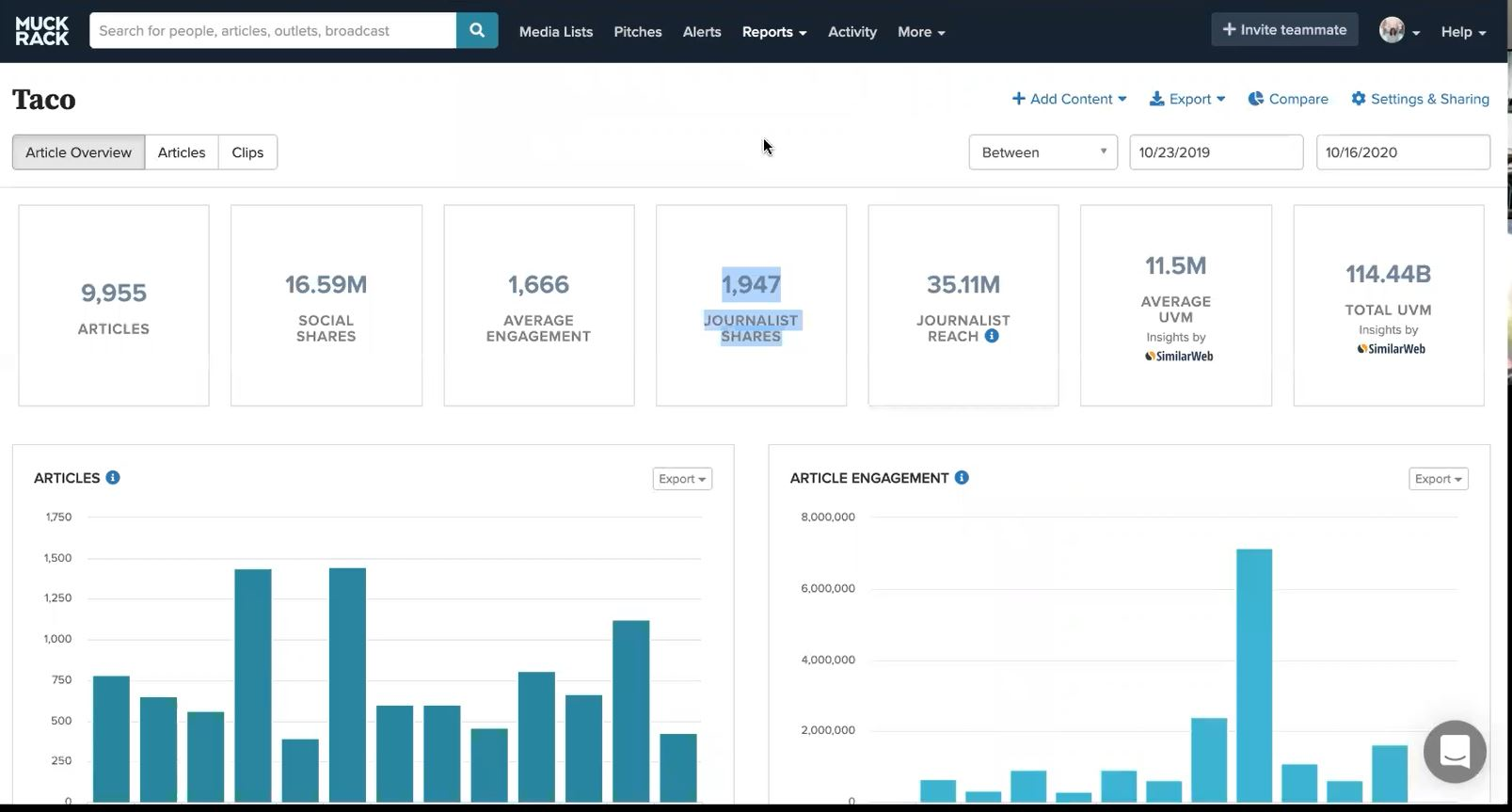
For journalist outreach specifically, Muck Rack is the most useful tool we've worked with. The reason is that journalist profiles show their recently published articles, beat focus, and social activity. That makes personalizing a pitch achievable at scale.
Sending a pitch referencing a journalist's recent piece on fintech regulation pushed open rate closer to 50%, instead of the general 12%.
Key Features:
- Media database - searchable journalist and editor contacts with pitching preferences, updated in real-time.
- Pitching and distribution - build targeted media lists, send personalized pitches, track opens and follow-ups.
- Media monitoring - real-time alerts for brand mentions, competitors, and industry topics across news, social, and broadcast.
- Impact reporting - automated dashboards tracking reach, sentiment, and share of voice.
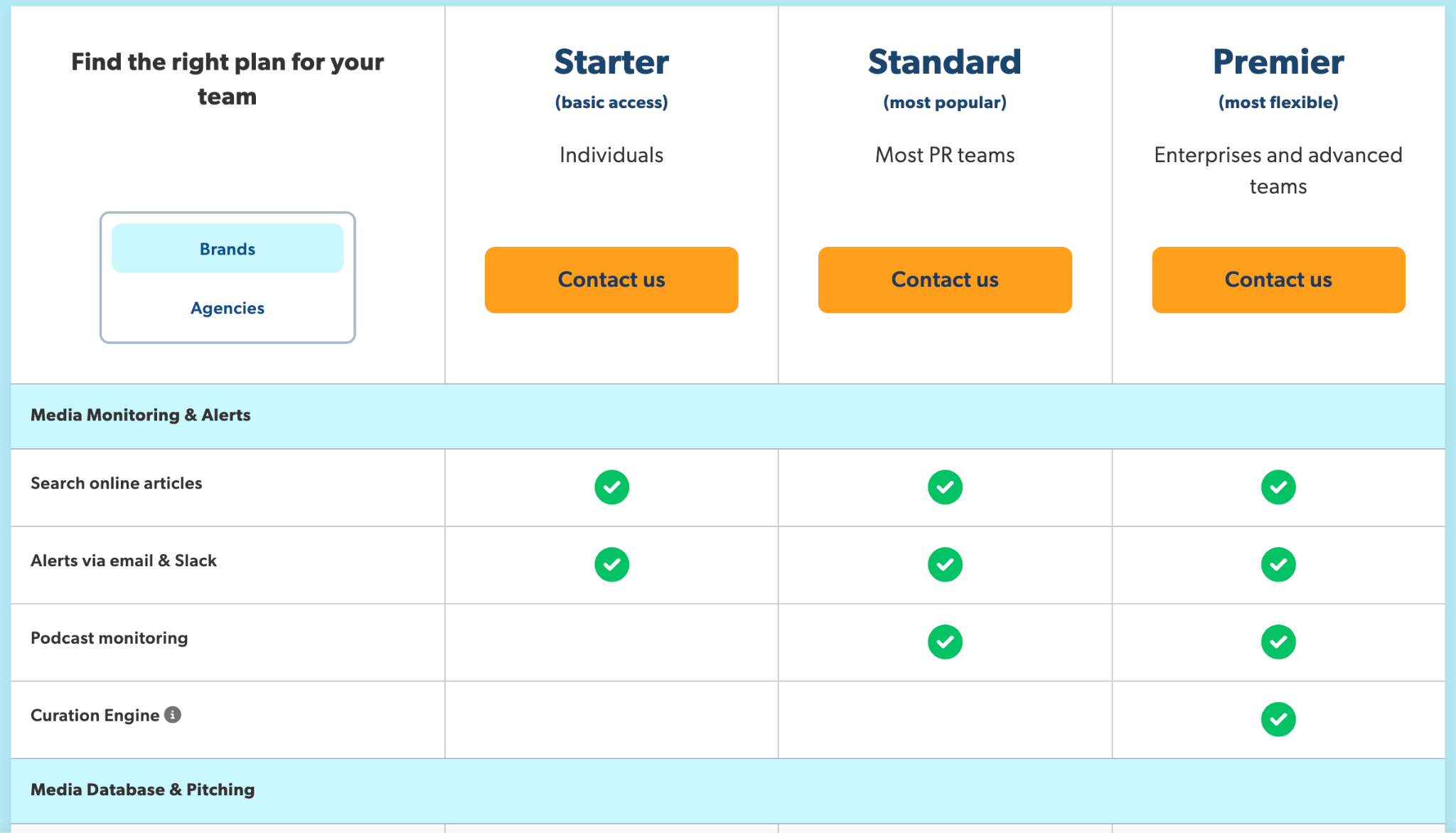
Pricing: They don’t publish the pricing (it’s accessible via request), but annual subscriptions usually range from $5,000 to over $50,000. It all depends on the features you want, team size, portfolio size, and length of use.
BuzzStream
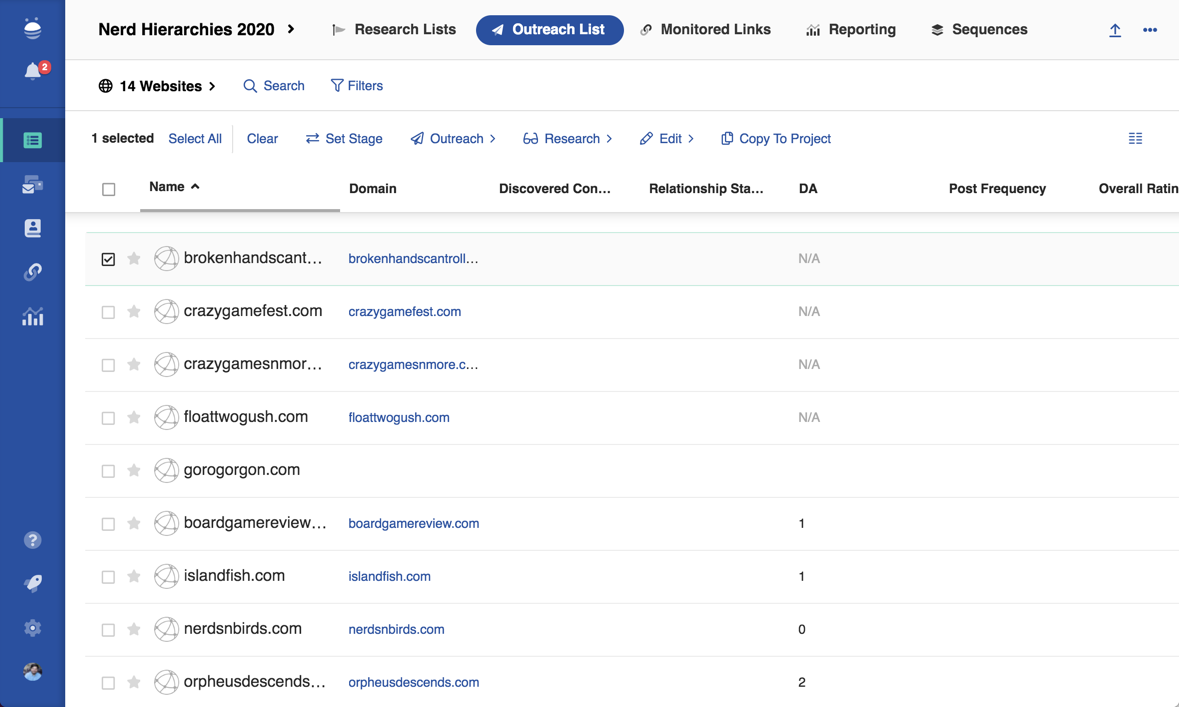
It’s the best option if link-building outreach is your primary use case rather than brand coverage. It's built specifically for managing email sequences to link prospects, tracking contact history across team members (so two people don't pitch the same editor), and running campaigns at volume.
Their Chrome extension (BuzzStream Buzzmarker) lets you add a prospect directly from their website.
Key Features:
- Contact scraping - paste a journalist's URL, and it pulls their email, social handles, and site metrics automatically.
- Email sequencing - sends your pitch and follows up automatically if they don't reply.
- Shared PR CRM - your whole team sees every conversation with every journalist, so no one pitches the same contact twice.
- Browser extension (Buzzmarker) - add prospects and find contact details without leaving the page you're browsing.
- Campaign analytics - tracks open rates, replies, and placements in one dashboard.
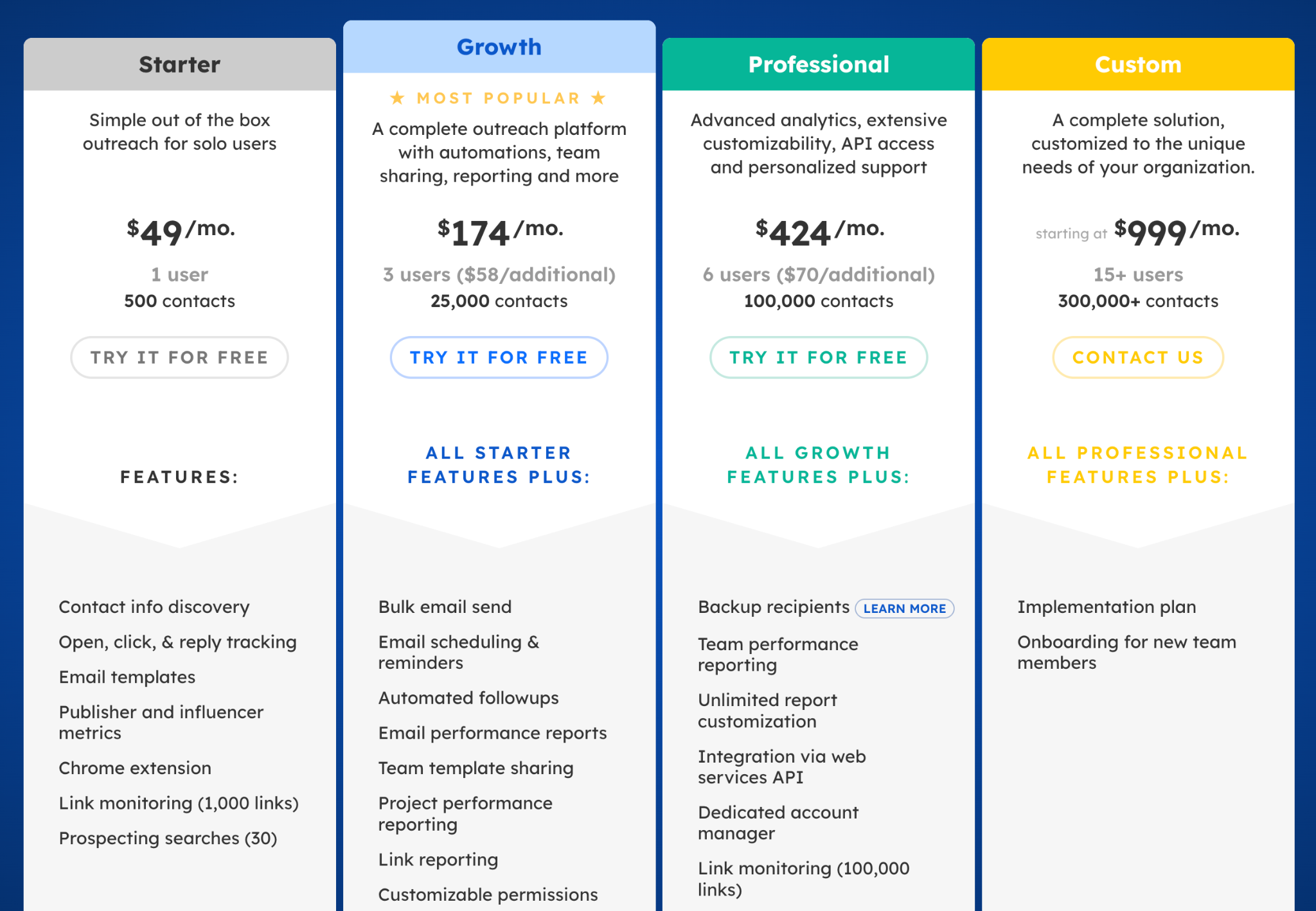
Pricing: Plans start at $49/month for 500 contacts. You can scale them as you go bigger.
Qwoted
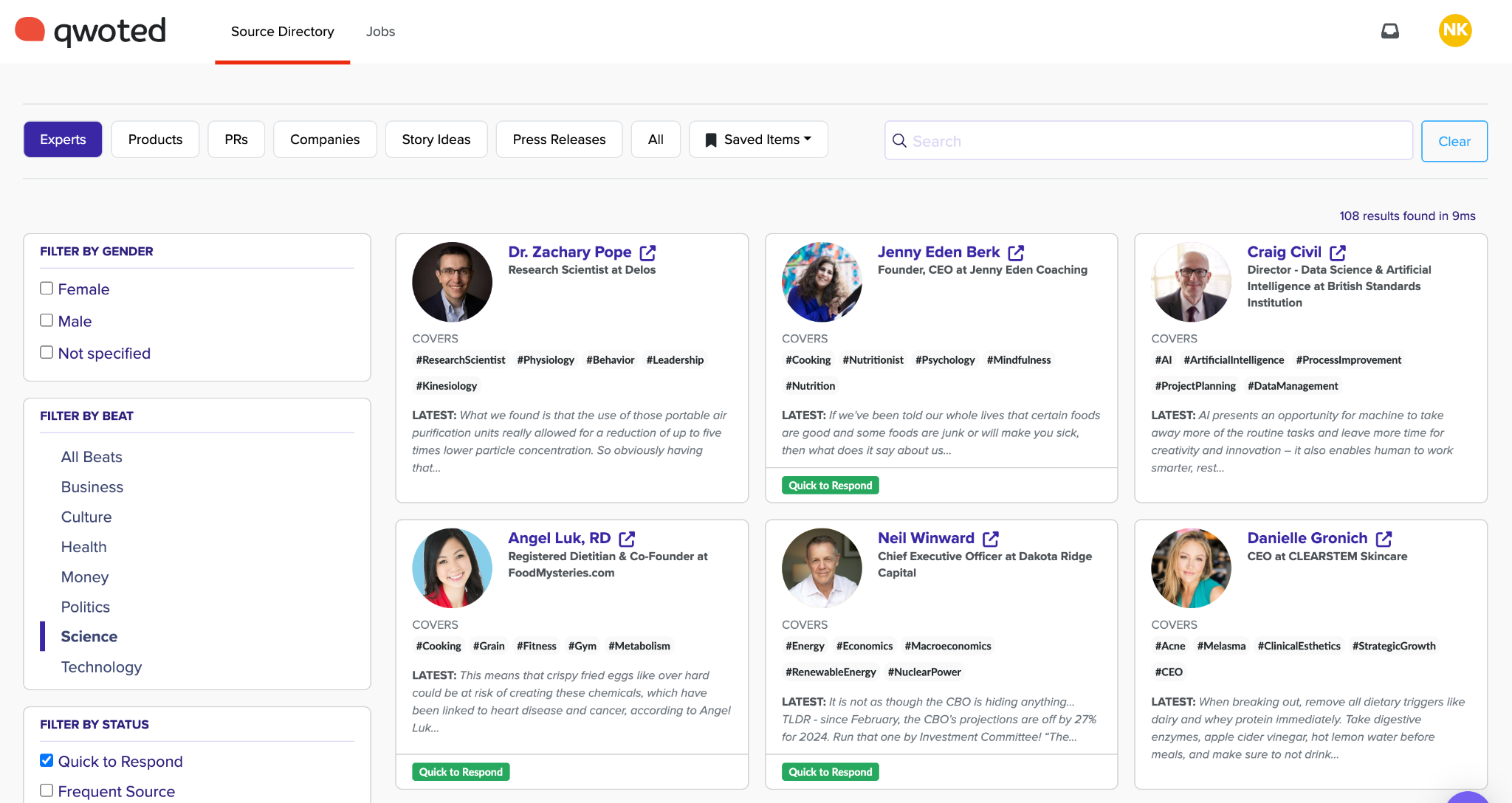
Is worth knowing about because it flips the outreach model. You can still search, filter and find journalists, PRs, companies, and others, but also journalists post queries for expert sources they're actively seeking. For thought leadership campaigns and reactive PR, it's an efficient way to get placed without cold pitching.
Key Features:
- Media request feed - filter live journalist queries by keyword, outlet, or beat in real-time.
- Pitch intelligence - see low-competition queries so you can target the ones most likely to convert.
- Media database - filter journalists by beat and location, and pitch them directly from the platform.
- Read receipt tracking - get notified the moment a reporter opens your pitch.
- Free pitch filter - toggle to show only opportunities that don't require platform credits.
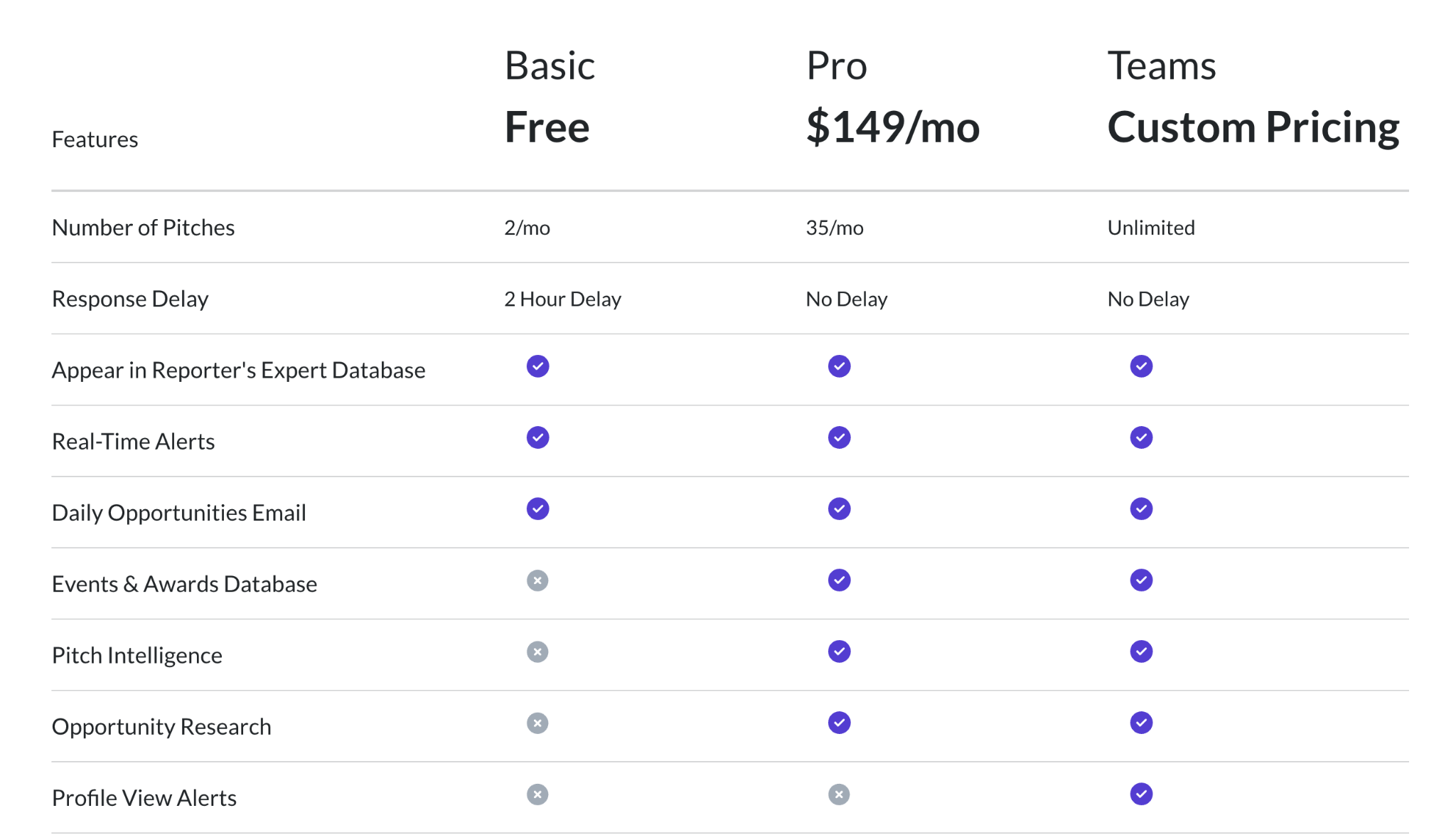
Pricing: The free (Basic) plan starts with a maximum of 2 pitches a month and a delay in response time, so you can start with it for testing, but it’s not effective to use for scaling any strategies. Pro plans start at $149 a month.
Best Digital PR Tools for Media Monitoring and Analytics
This is the category where the price gaps are most dramatic and where it's easiest to overpay for features you won't use. So, pay attention.
Only for this category, I will also give you my assessment on which types of teams is the digital PR tool best for.
Meltwater
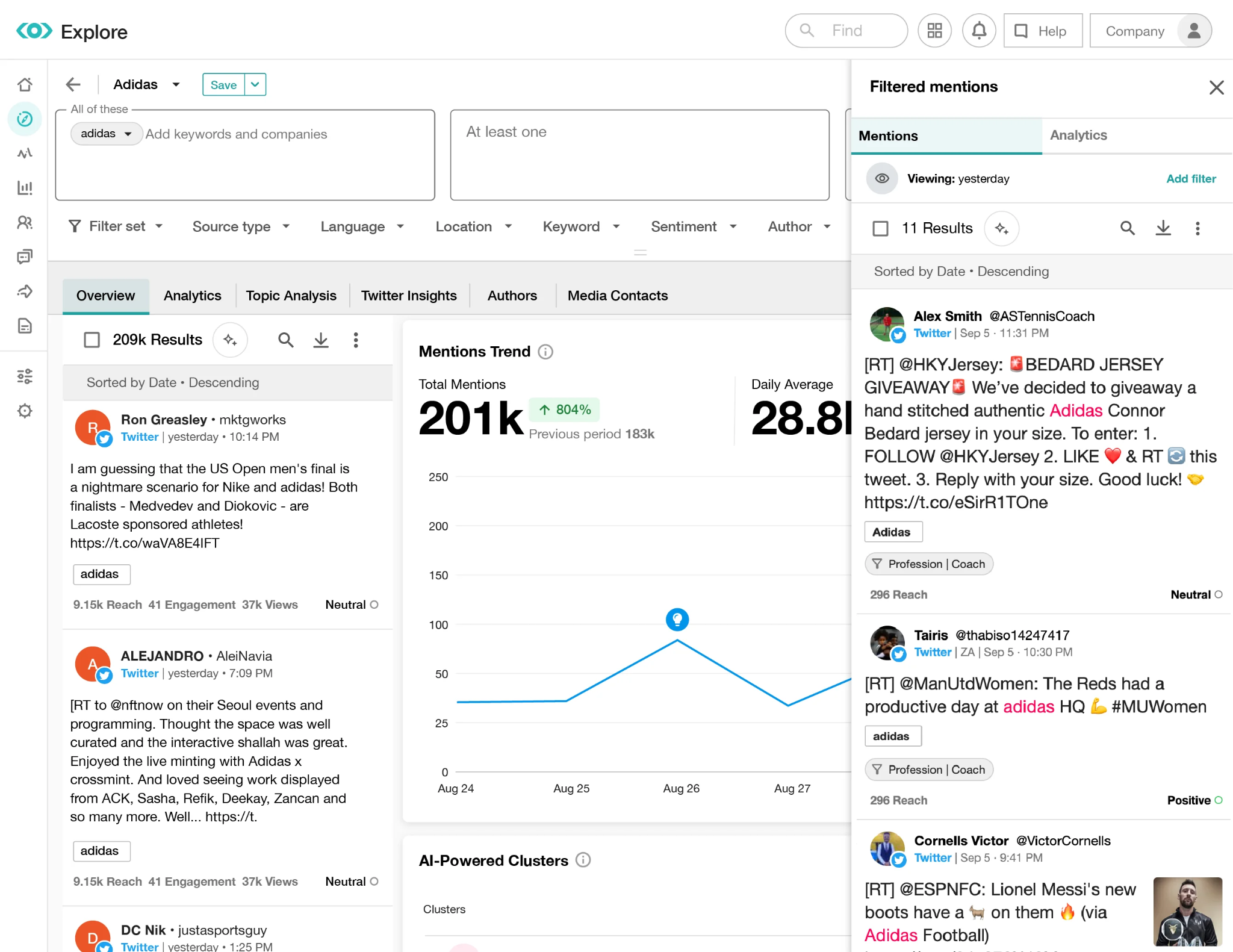
Meltwater has a base of 270,000+ sources across news, social, broadcast, and podcasts, and monitors them all in real time. The sentiment analysis has 85%+ accuracy and is built on industry-specific language. The crisis alerts catch coverage spikes early, before things snowball. Share-of-voice tracking comes standard, not as an add-on.
That said, Meltwater requires a dedicated analyst to extract real value. If your team is two or three people running campaigns and reporting back to clients, you will use about 30% of what you're paying for. Be honest about that before signing an annual contract.
Key Features:
- Media monitoring - track brand mentions, keywords, and share of voice across news, podcasts, broadcast, and social worldwide.
- Journalist database - search 450,000+ verified contacts by beat and recent coverage topics.
- AI visibility tracking - monitor how your brand surfaces in ChatGPT, Perplexity, and other LLM search engines.
- Crisis and sentiment analytics - real-time analysis of audience sentiment, narrative shifts, and competitor coverage.
- PR reporting - automated dashboards that track campaign performance and demonstrate ROI to stakeholders.
Pricing: They also don’t publish pricing on the website, but it typically starts around $2,000/month and scales to $15,000+ for enterprise.
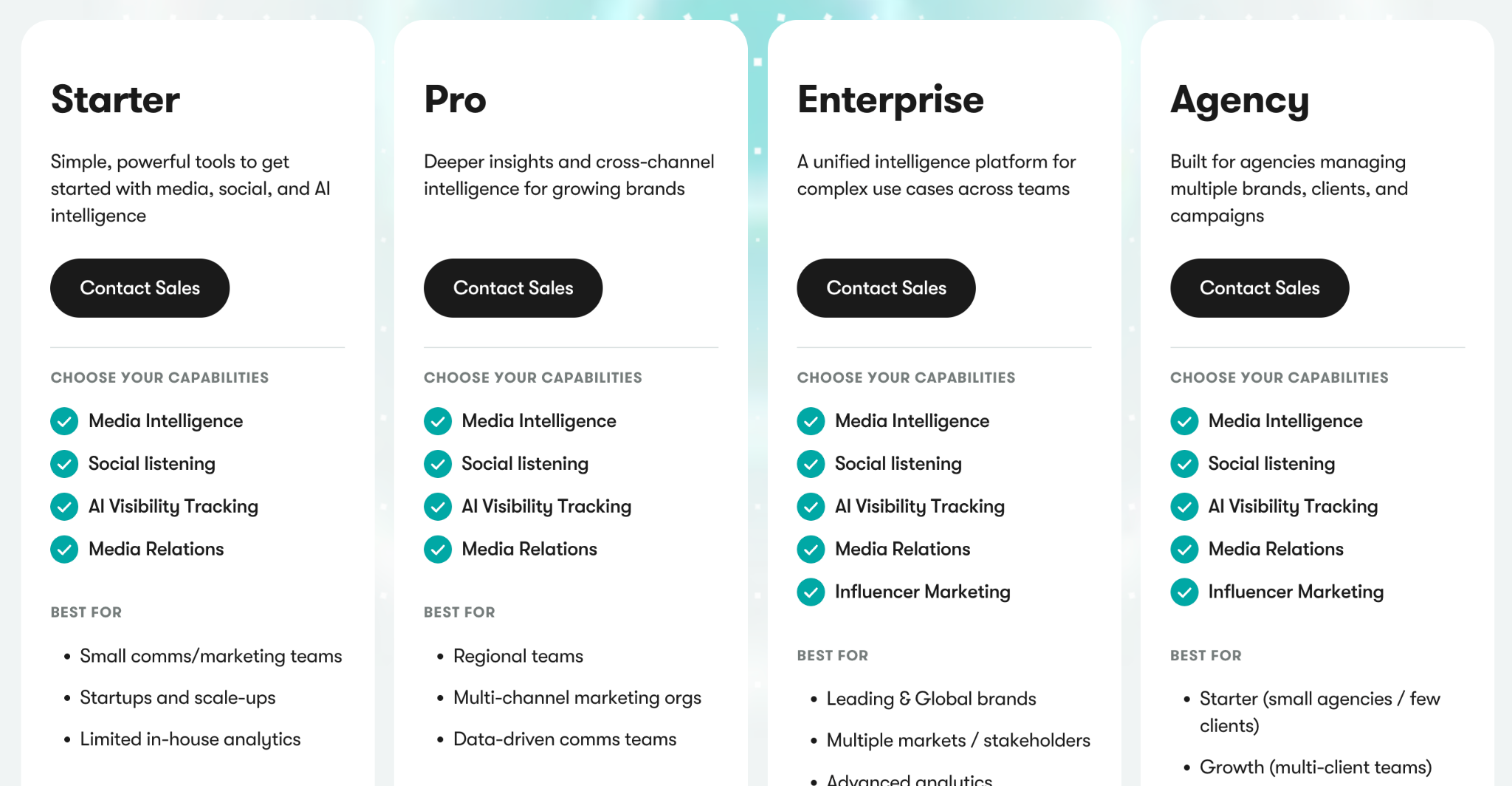
Best for: Most teams
Brandwatch
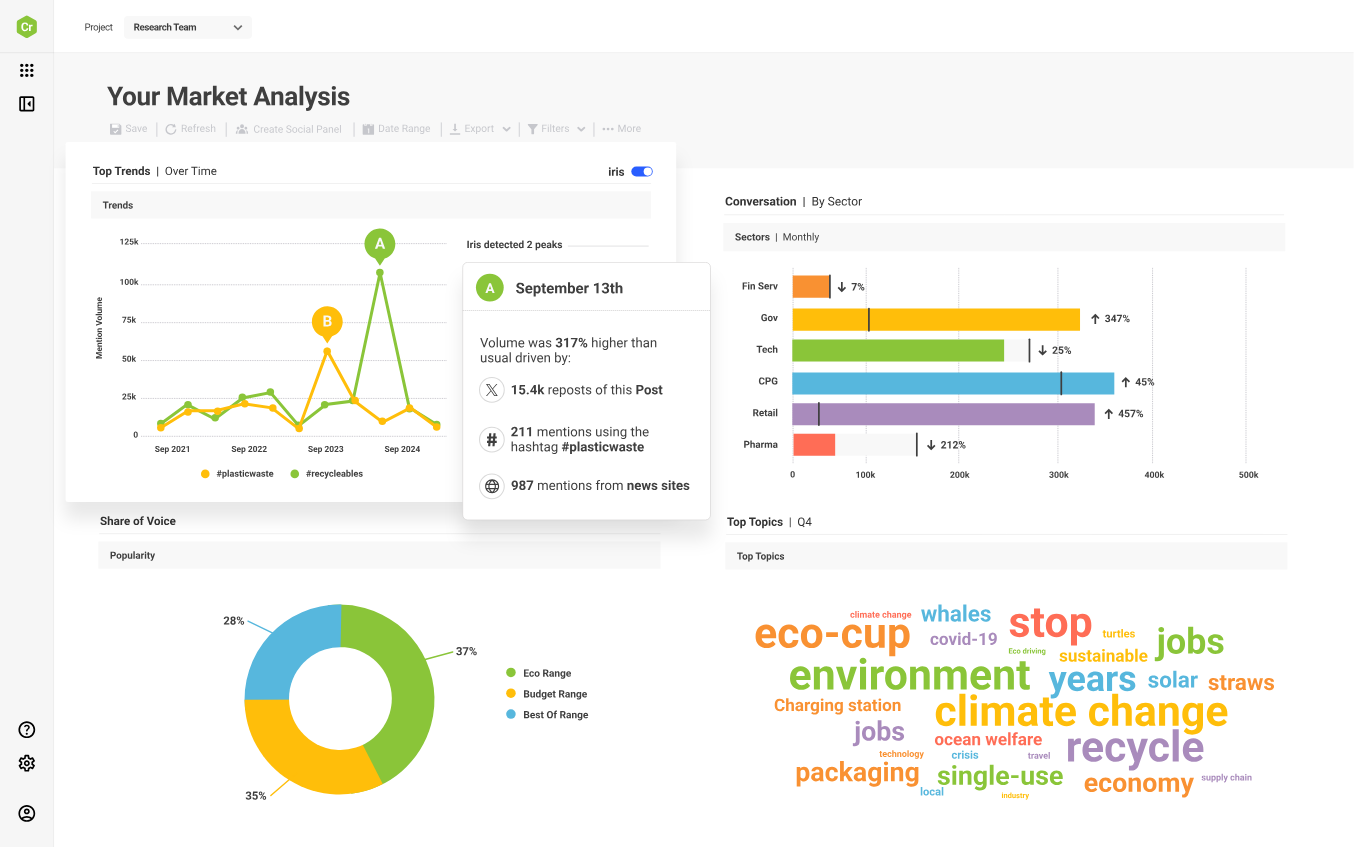
Brandwatch is the strongest social listening tool in this space, with demographic breakdowns of who's talking about your brand (age, location, interests), image recognition for logo appearances in content, and competitive share of voice across social and news combined.
It's also, as of 2026, the only major platform with native AI citation tracking - meaning it can monitor how your brand appears in ChatGPT and Perplexity responses. More on why that matters in the measurement section.
Key Features:
- Media monitoring - tracks mentions across 100M+ sources, including news, social, blogs, and forums in real-time.
- Sentiment analysis - AI automatically classifies mentions as positive, negative, or neutral as they come in.
- Influencer and journalist discovery - identifies who's actively writing or posting about topics relevant to your brand.
- Crisis alerts - instant notifications for sudden spikes in mentions or negative sentiment, with automated brand health monitoring.
- Custom dashboards - visualize share of voice, mention volume, and campaign performance in stakeholder-ready reports.
Pricing: Not published on the website, but reportedly starts around $1,500/month, again depending on a bundle of features like data limits, user seats, and product suites. Free demo available.
Best for: B2C brands or social-first campaigns
Agility PR Solutions
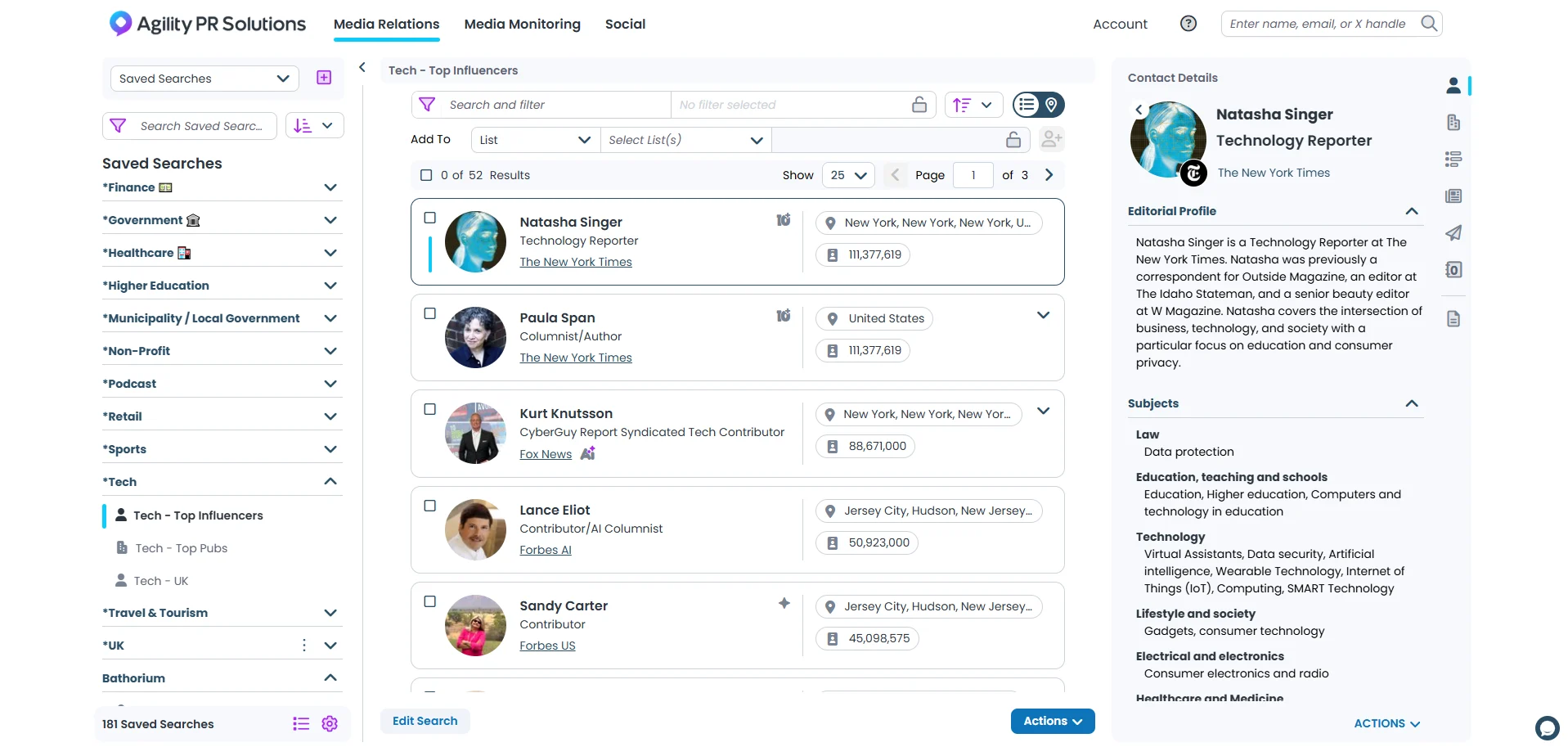
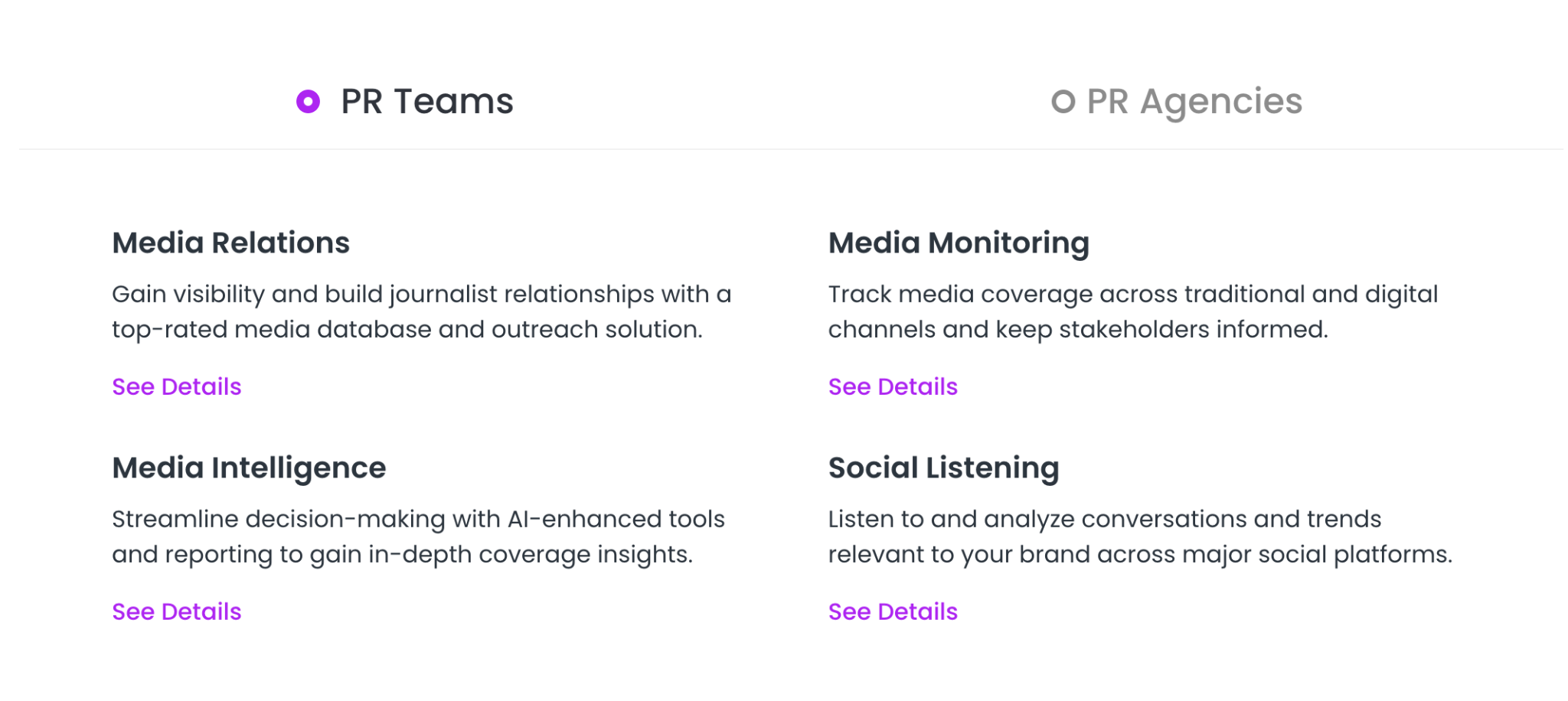
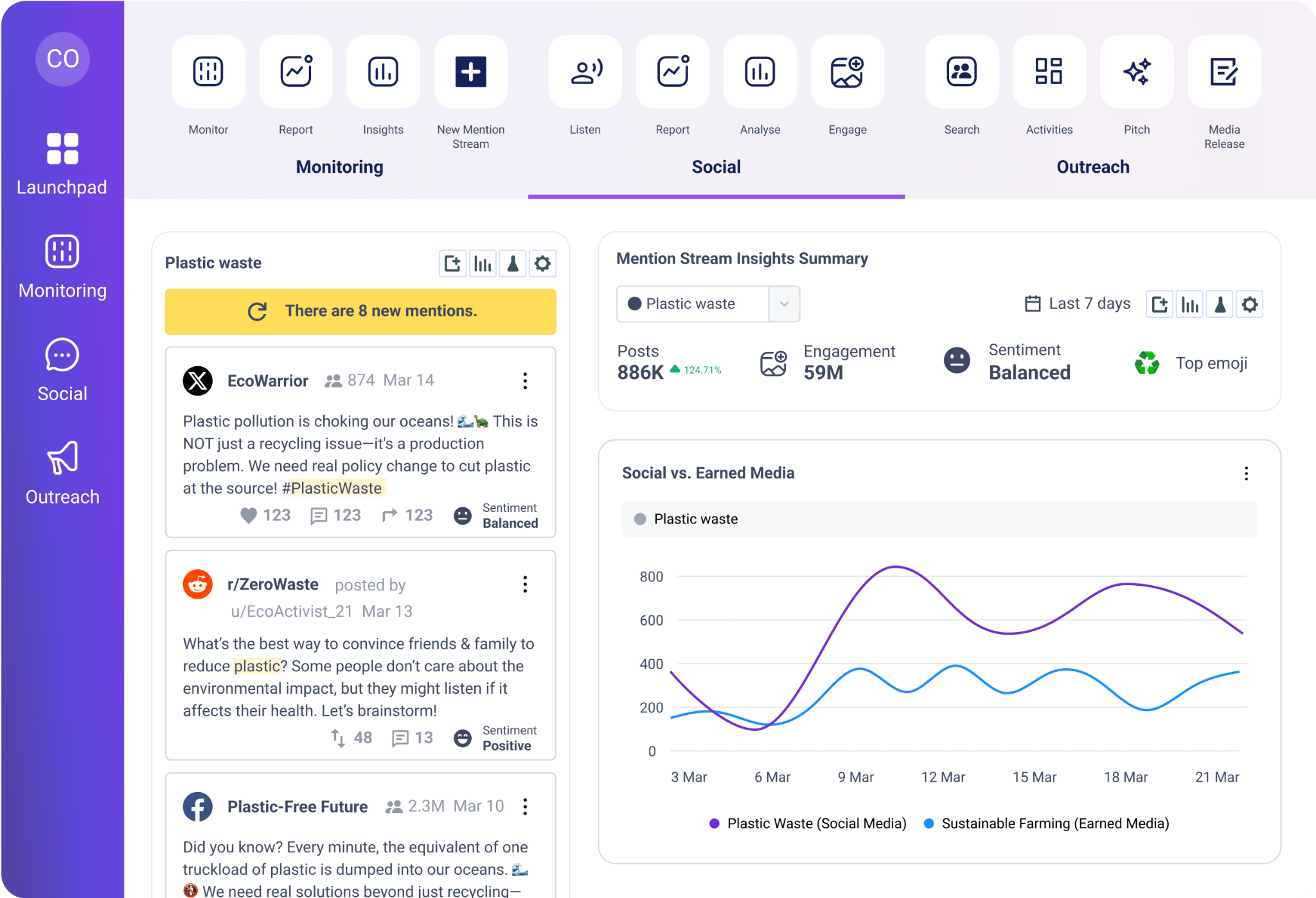
Agility has share-of-voice tracking, broadcast monitoring, crisis alerts, and a useful AI assistant for sentiment summaries - all with onboarding that takes weeks, not months. For agencies managing multiple clients, it's worth knowing that Agility PR offers white-label dashboards at no extra per-client fee, which is a meaningful cost difference compared to Cision or Meltwater.
Key Features:
- Media database - search 1.1M+ journalist and outlet profiles by beat, recent articles, and pitching preferences.
- AI writing assistant - drafts press releases, personalizes pitches, suggests keywords, and translates languages.
- Media monitoring - tracks brand mentions and sentiment across news, broadcast, podcast, print, and social in real-time.
- Pitch distribution and tracking - send press releases and monitor open rates and click-throughs from one place.
- Analytics and reporting - measure audience engagement, geographic reach, and campaign ROI with shareable dashboards.
Pricing: Pricing bundle is not public, and depends on the key feature/tool you want for your PR activities (see below). You can request pricing by submitting your agency/team information.
Best for: Mid-market teams
Cision (CisionOne)
Cision has the biggest database on the list - 1.4 million contacts, 270 countries, and PR Newswire distribution. It earns its price if you're a large team pitching constantly and want everything in one place. If you're not, it's overkill.
Key Features:
- Media database - search and filter journalists, editors, and influencers, then pitch and track opens from one place.
- Media monitoring - track brand, competitor, and keyword mentions across news, broadcast, podcasts, and social in real-time.
- AI narrative tracking - surfaces emerging story angles in your coverage and recommends strategic next steps.
- Automated reporting - generate HTML, PDF, or CSV reports measuring impressions, sentiment, and campaign ROI.
- Premium content access - monitor placements in paywalled publications including Dow Jones and Factiva.
Pricing: Minimum contracts typically run $7,000-$10,000/year, and agencies need to watch for per-client workspace fees that can balloon the cost significantly. That said, they don’t publish their pricing, so you need to submit your information to get a quote.
Best for: Enterprise
Best Digital PR Tools for SEO and Backlinks
The relationship between digital PR and link building is close enough that you need tools that speak both languages. I’ve used three of these tools most actively and seen high ROI.
Ahrefs
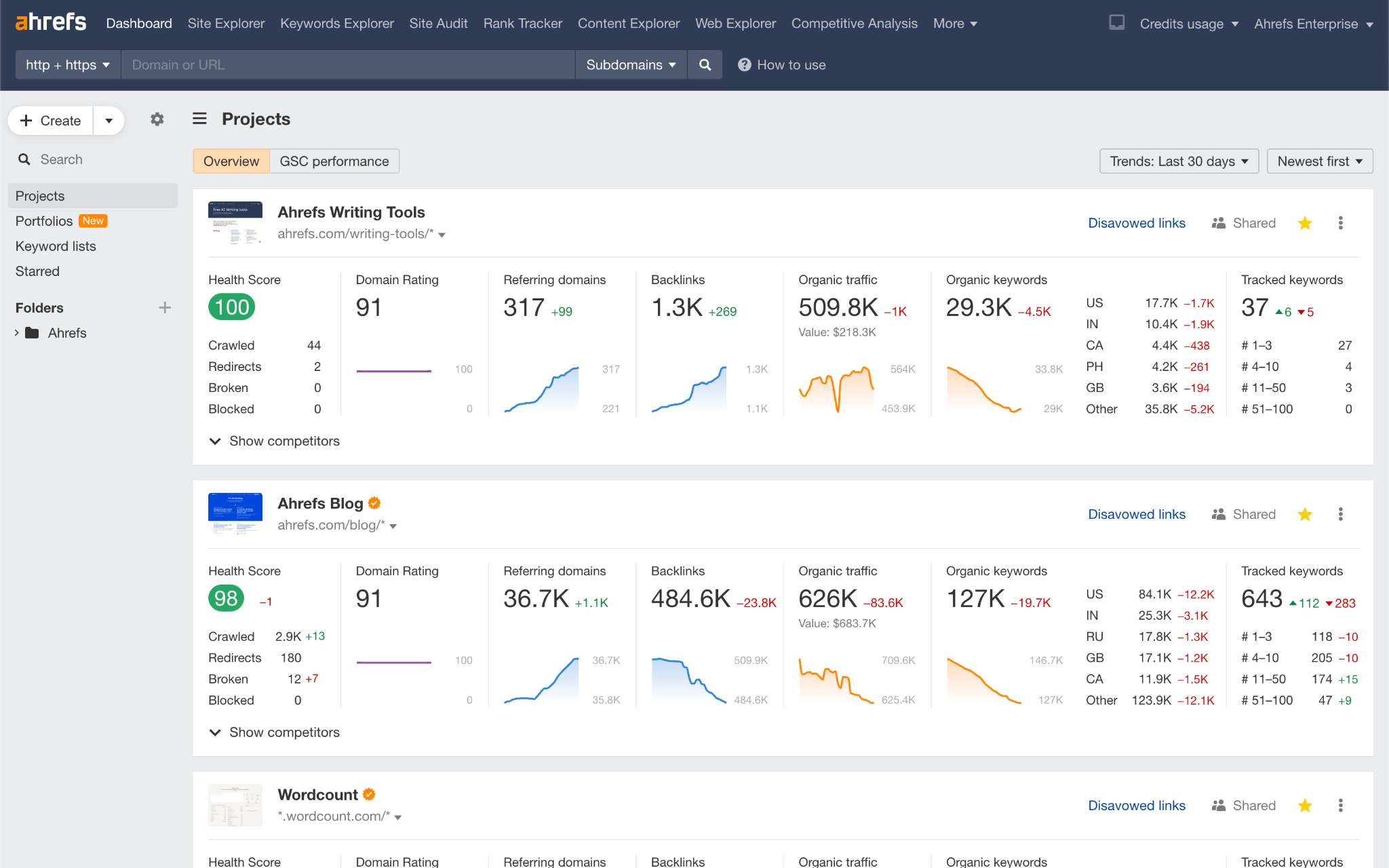
Ahrefs is primarily an SEO tool, but for digital PR, it's genuinely useful - particularly for link prospecting, competitor backlink analysis, and measuring the SEO value of coverage you've earned. It won't replace a media database, but it sits well alongside one.
Key Features:
- Site Explorer - Analyze any domain's backlink profile to see who's linking to competitors, which content earns the most links, and identify publications worth targeting for digital PR outreach.
- Content Explorer - Search billions of indexed pages by topic to find what's getting shared and linked to in your niche, helping you build data-led story angles with proven traction.
- Alerts - Set up backlink and mention alerts so you're notified when a piece of coverage goes live and links to your client, or when a competitor earns a new placement.
- Link Intersect - See which domains link to multiple competitors but not to you — a shortlist of high-value targets for outreach already hiding in plain sight.
- DR (Domain Rating) - A widely used proxy metric for evaluating the authority of a publication, useful when reporting link quality to clients or stakeholders.
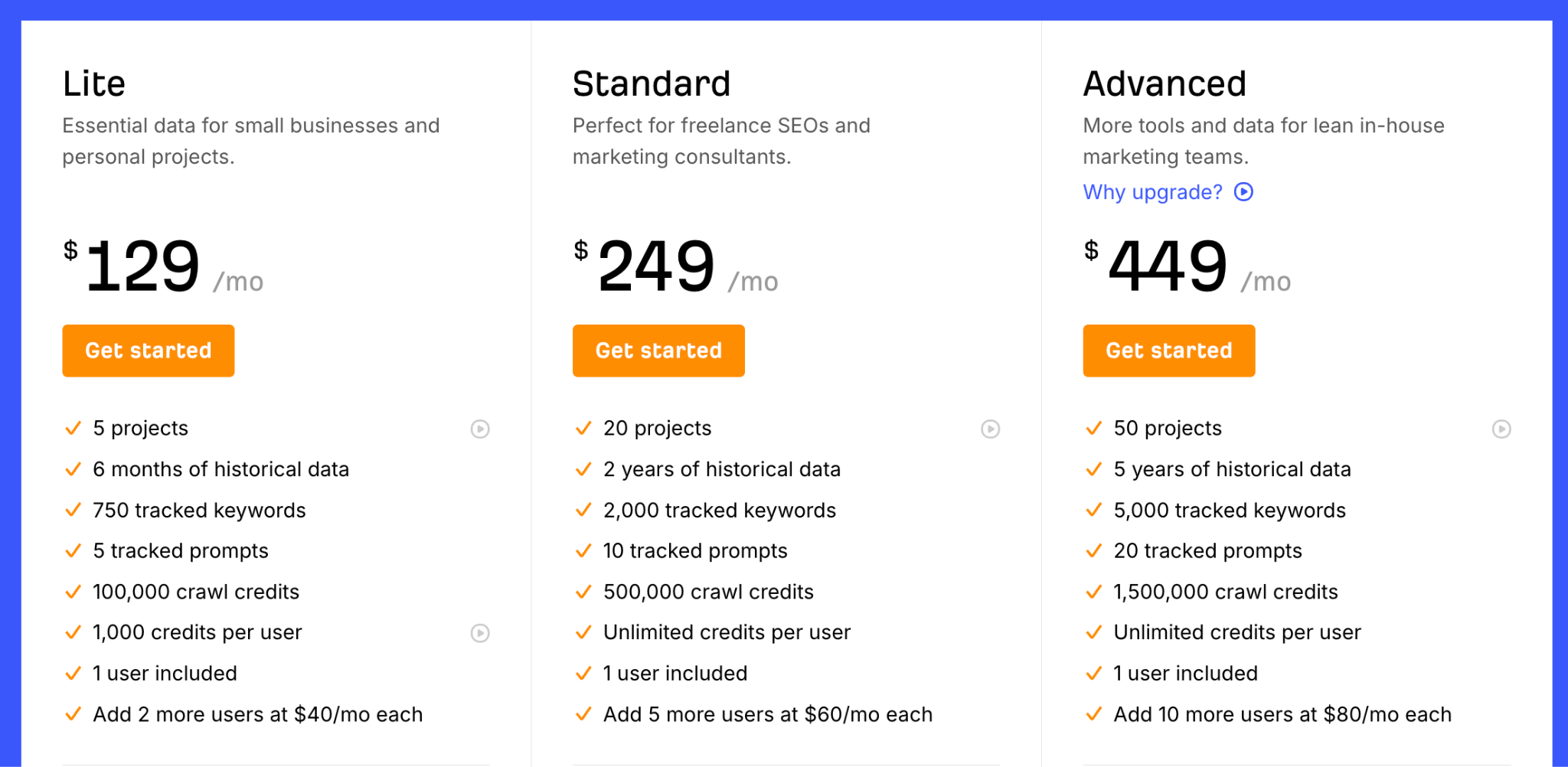
Pricing: Ahrefs runs on a subscription model starting at $129/month (Lite), with the Standard plan at $249/month being the most common choice for PR teams who need Content Explorer access. There's no free tier.
Semrush
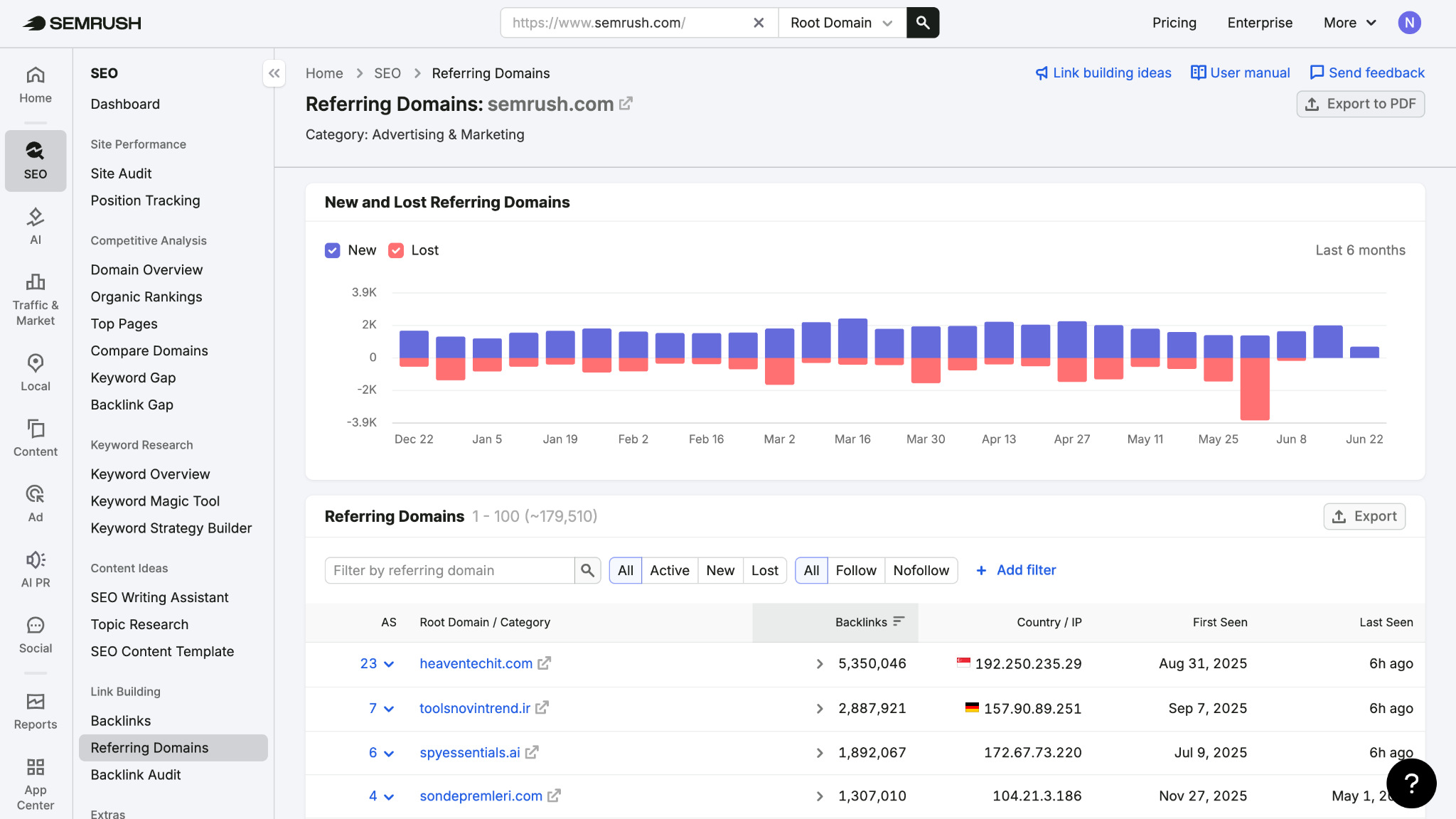
Semrush overlaps with Ahrefs on backlink analysis but goes further for digital PR with a dedicated PR toolkit, brand monitoring, and a media outreach module. It's arguably the more well-rounded option if you want SEO intelligence and PR workflow features in a single platform.
Key Features:
- Backlink Analytics & Gap - Audit any domain's link profile and run competitor gap analysis to surface publications that cover your space but haven't yet covered your client.
- Brand Monitoring - Track mentions of your brand, client, or target keywords across the web and news, including unlinked mentions you can follow up on to request a link.
- PR Toolkit (via Trends add-on) - Monitor share of voice, track campaign coverage, and benchmark PR performance against competitors in your sector.
- Topic Research - Identifies trending questions, headlines, and angles around any subject, useful for building reactive or data-led PR campaigns with built-in search demand.
- Traffic Analytics - Estimate the actual audience size of publications you're targeting or pitching, going beyond DA/DR to assess real reach.
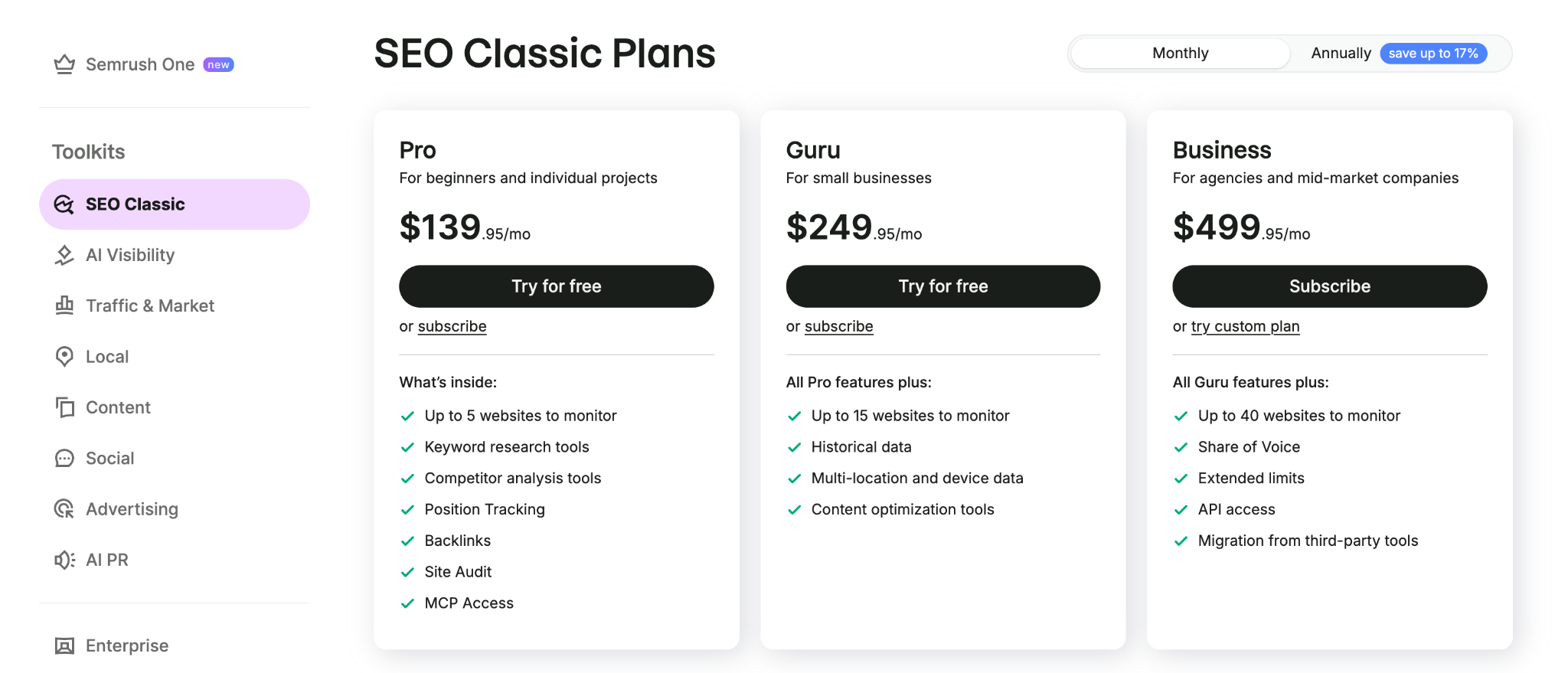
Pricing: Semrush starts at $139.95/month (Pro), though the Guru plan at $249.95/month unlocks the content marketing and historical data features most relevant to digital PR. There are additional content, social, and AI visibility toolkits you may consider for an extra cost.
Monitolink
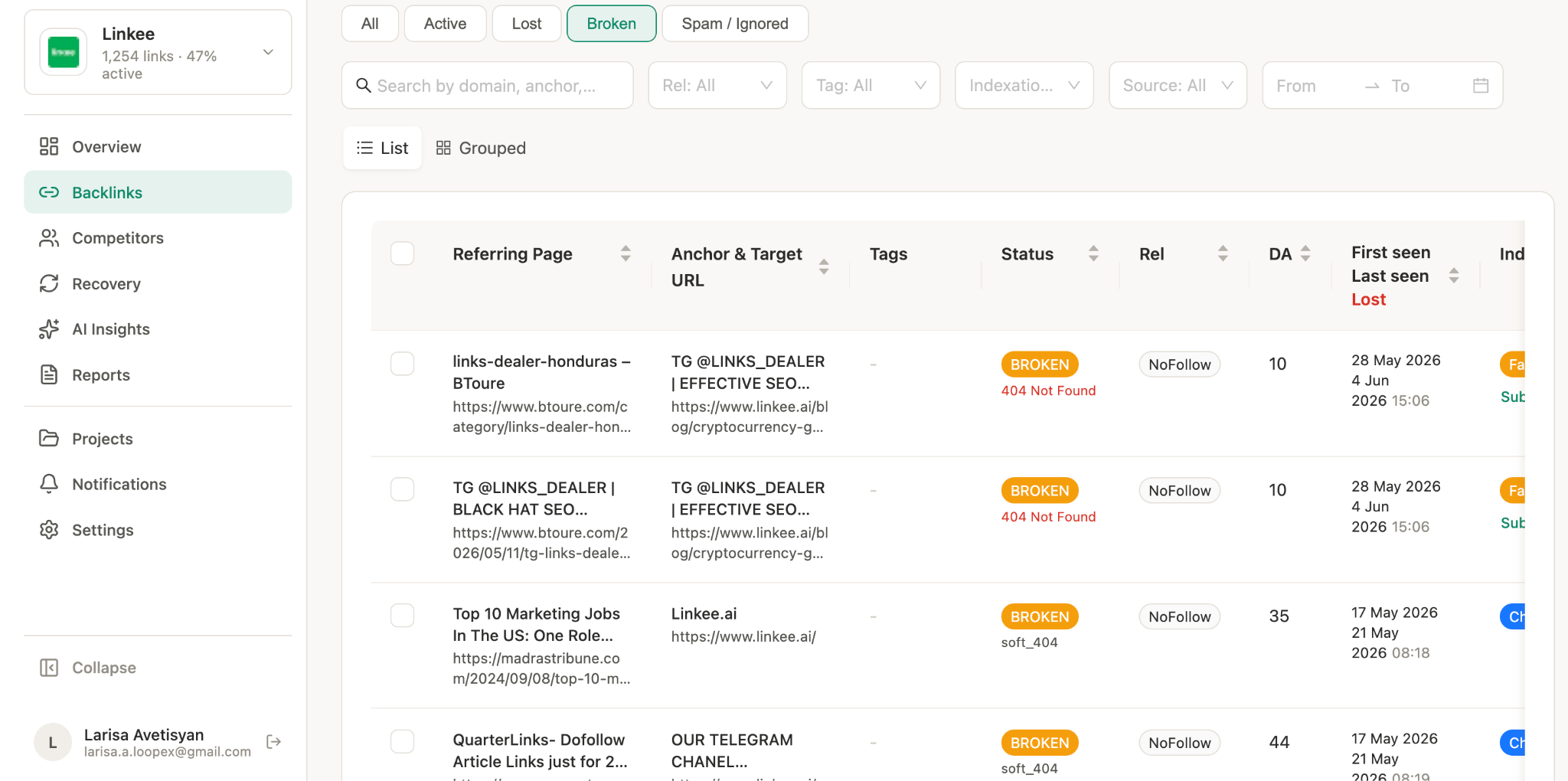
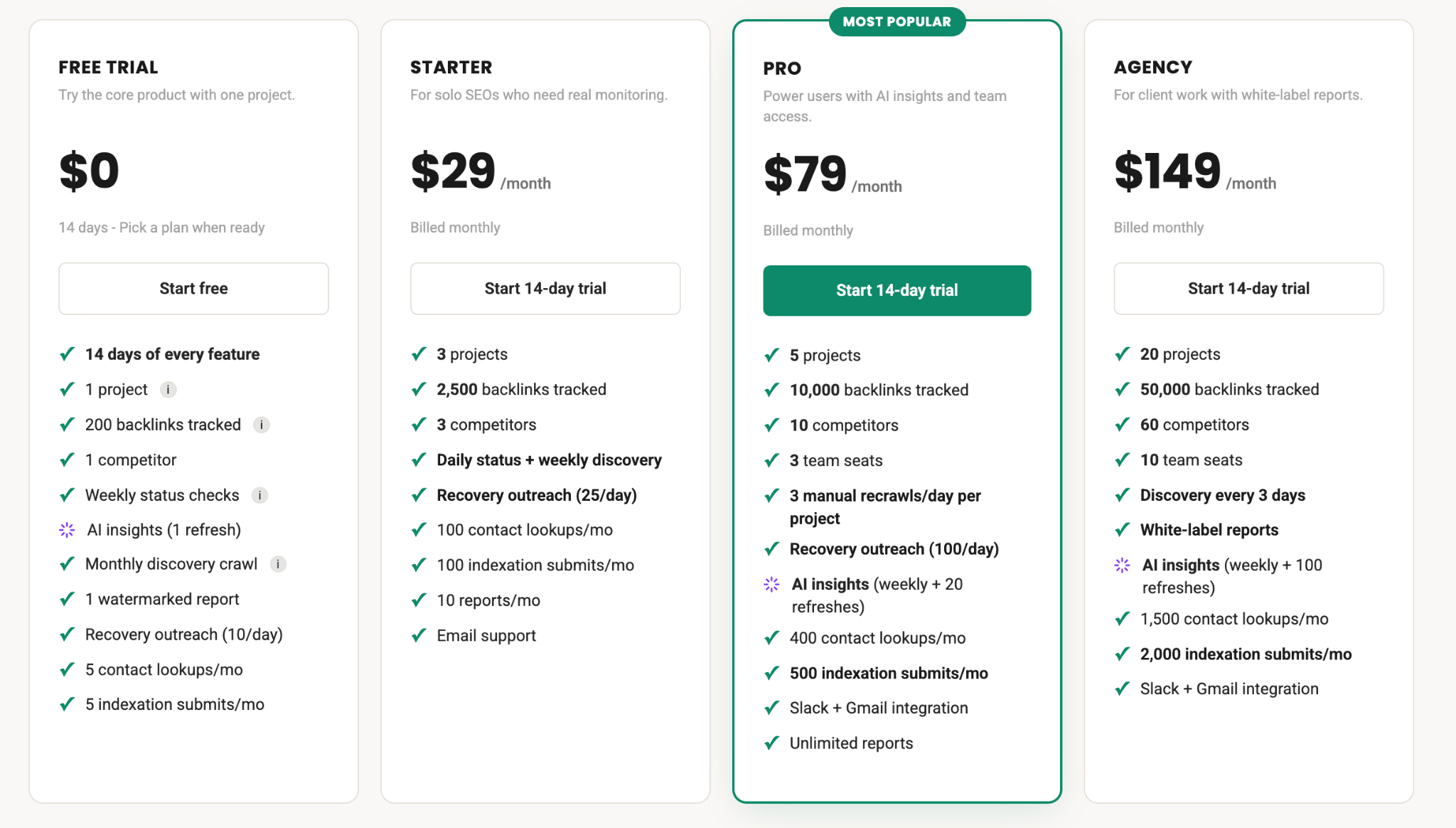
Monitolink is a specialist backlink monitoring and recovery tool - narrower in scope than Ahrefs or Semrush, but deeper where it counts for digital PR. Where most SEO platforms check your backlinks weekly and leave you to chase lost links manually, Monitolink monitors 24/7, alerts you the same day a link drops, and lets you action recovery outreach without ever leaving the dashboard.
For digital PR teams who've invested time earning high-authority placements, it plugs a real gap: knowing a link has gone before the client notices.
Key Features:
- 24/7 backlink monitoring - Tracks the live status of every backlink in real-time, flagging lost, changed, or deindexed links the same day they occur.
- Built-in link recovery outreach - Contact site owners directly from the dashboard, with both manual and automated recovery sequences.
- AI-powered backlink analysis - Surfaces anchor text optimisation opportunities, flags toxic links, and provides actionable insights across your full link profile without requiring manual auditing.
- Competitor backlink intelligence - Identifies domains linking to competitors but not to your client, built natively into the platform.
Pricing: Monitolink has a 14-day free trial available, with paid plans starting at $29/month - a low entry point compared to enterprise SEO platforms.
Content and Ideation Tools
These are the tools that inform what campaigns you run in the first place. Underrated, rarely written about, but genuinely important.
Google Trends - free, and still one of the best tools for identifying rising topics before they peak. For newsjacking and reactive PR campaigns, setting up trend alerts in your vertical gives you a meaningful head start. It's how you find the angle that journalists are already primed to cover.
BuzzSumo - useful for content research and influencer identification. The content discovery function (searching 8 billion+ articles by topic and filtering by backlinks or shares) helps you understand what's already earning coverage and links in your space, which shapes campaign ideation. Also useful for finding which journalists or outlets have recently covered topics adjacent to your story.
Canva - the unsexy answer, but relevant. A significant portion of digital PR campaigns involves a visual asset - an infographic, a data visualization, or a pitch deck for a brand collaboration. Having a designer on hand is ideal; Canva is the realistic alternative for most teams.
Exploding Topics - Google Trends' more opinionated cousin. It surfaces topics that are growing in search interest before they become mainstream. For campaigns built around being first to a story, it's worth checking regularly.
Free Digital PR Tools Worth Using in 2026
Not everything requires a budget. These free tools do genuine work:
Google Alerts - still the most accessible brand monitoring tool available. Set alerts for your brand name, key executives, competitors, and topic areas relevant to your campaigns. It won't catch everything, but it catches more than nothing.
Google Search Console - gives you referral traffic data and shows you which placements are driving visitors to your site. Free and underused by most PR teams.
Google Trends - for identifying rising search interest around topics before they peak. Genuinely useful for timing reactive campaigns.
HARO alternatives - HARO (Help a Reporter Out) has become heavily saturated and has changed its model. Current alternatives worth trying include Qwoted, Connectively, and Source of Sources (on X/Twitter).
What to Measure with Your Digital PR Tools
Measuring digital PR campaigns is its own topic, but your tools are only useful if you're tracking the right metrics with them. Here's what matters:
- Backlinks (volume and quality) - Track the number of linking domains, average DR, and what percentage land on priority pages. Ahrefs shows this clearly.
- Referral traffic - UTM-tag your links before pitching, then track referral sessions and conversions in Google Analytics. This is the most direct line between PR activity and business outcomes.
- Share of voice - If you earn 40 placements this quarter but your closest competitor earns 120, the raw number flatters you. Meltwater, Brandwatch, and Agility PR all track this natively.
- Sentiment and tone - A passing mention isn't the same as coverage that positions you as an authority, and negative coverage is worse than none. Sentiment tracking catches reputation issues early and gives you an honest read on whether campaigns are actually working.
And of course AI citations - the metric most teams aren't tracking yet!
This is a relatively new territory. As AI search tools like ChatGPT and Perplexity become a meaningful source of brand discovery, appearing in AI-generated responses for relevant queries is becoming a legitimate digital PR KPI.
Digital PR for GEO is an area we're actively working in, and the short version is that the same factors that make digital PR effective for SEO (earning high-authority coverage and being cited as a source) also influence whether AI tools cite your brand.
Currently, Brandwatch is the only major platform with native AI citation tracking. Most teams track this manually by running relevant queries in ChatGPT and Perplexity monthly and logging the results. Clunky, but it works until better tooling exists.
Key Takeaways
The best digital PR tools stack is the one your team will use consistently. Before buying anything, be clear about three things:
- What type of campaign work are you primarily running (outreach-led, content-led, reactive),
- How much volume you're operating at, and
- Whether someone on your team will genuinely interpret the analytics or whether dashboards will go unread.
Start lean. Add tools as your volume and reporting needs grow.
If you're building out a digital PR strategy and want to understand how these tools fit into brand-building through digital PR, just get in touch with our digital PR agency, and let’s have a free discussion session.
Frequently Asked Questions
What's the difference between digital PR tools and traditional PR software?
Traditional PR tools focus on press release distribution, broadcast monitoring, crisis communications, and reputation management, often across offline channels. Digital PR tools are built specifically for online media outreach, link acquisition, journalist relationship management, and SEO outcomes. There's some overlap at the monitoring layer, but the core use cases are different. A digital PR agency running link-building and content-led campaigns has different tool needs than a corporate comms team managing a product recall.
What tools do digital PR agencies use most?
Based on our own digital PR agency’s practice and what we see across the industry: Muck Rack or BuzzStream for outreach, Ahrefs for SEO and backlink tracking, Meltwater or Agility PR for monitoring, and CoverageBook for reporting. The specific combination depends on budget and campaign focus, but those five tools cover the majority of digital PR workflows.
Do I need a media database for digital PR?
For reactive PR (responding to journalist queries via Qwoted or similar), you can get results without a paid database. For proactive outreach - building targeted lists and pitching specific journalists for specific stories - a database like Muck Rack saves significant time and improves targeting accuracy. If you're pitching more than 30-40 journalists per month, a database earns its cost fairly quickly.
Is digital PR effective for industries with complex compliance requirements?
Yes, but tool selection matters more. For industries like legal, finance, iGaming, and healthcare, you need monitoring platforms with longer data retention and clearer audit trails. Cision and Agility PR both offer compliance-grade reporting.
For iGaming digital PR specifically, where regulatory environments vary by market, the outreach database needs to include sector-specific publications alongside mainstream news.

