





I run a digital PR agency, and I talk to marketing leaders across industries every week who are trying to figure out where this channel is going - is digital PR a real growth lever, or a trend that peaked around 2022 and is now just an expensive way to get a few backlinks?
Here's my direct answer, and then I'll back it with the data and the campaigns behind it.
The Direct Answer
Digital PR is not hype. It's becoming more important, not less, because the two things it's built on - earned brand signals and third-party validation - are exactly what search engines and AI models are now weighting most heavily. What is hype is treating digital PR as a link-building tactic with better PowerPoint slides. If that's how it's being run, it will underperform and feel like hype, because it basically is. So, digital PR execution usually is the problem.
Why It Looks Like Hype (Let's Be Honest About This)
Before I make the case for digital PR, I want to steelman the skeptics, because their complaints are usually fair.
Vanity metrics dominate reporting. A lot of digital PR reporting is still "we got 40 pieces of coverage" with no connection to traffic, rankings, or revenue. If coverage volume is the only KPI on the slide, of course it looks like hype. It's disconnected from anything a CFO cares about.
Most "digital PR" is just link building with a press release attached. This is the biggest issue I see, and I've written about it in more detail in digital PR vs link building - a huge share of agencies pitch generic "data studies" purely to harvest backlinks, with zero thought given to brand story, audience, or journalist relationships. It gets links. It doesn't build anything durable.
The no-click problem is real. People see your brand mentioned in a Guardian roundup or a TikTok trend piece and never click through. If your only measurement is referral traffic, you're going to conclude the campaign did nothing - even when it helped with brand search and trust.
Results are slow and hard to fully attribute. Nobody's cracked perfect multi-touch attribution for earned media, compared to paid or owned. That's true. It's also true of most brand marketing, and nobody's calling brand marketing hype.
All fair points. None of them mean the channel doesn't work - they mean it's frequently run badly and measured worse.
The Data-Backed Case For "Digital PR Is the Future"
Here's what's changed, based on what we're seeing across client accounts and what's shifting in how search and AI systems evaluate brands.
1. Demand for the category itself is exploding
Search interest for "digital PR agency" in the US grew by over 1,000% in the past year. That's a category going mainstream in a market (the US) where digital PR has historically lagged the UK by years. When demand accelerates that fast, it's usually because buyers are seeing results elsewhere and want in, not because they've been fooled by a marketing buzzword.
2. Google is rewarding brand signals, not just backlinks
Most SEOs still haven't fully internalized this, but a backlink used to be the entire point back in the day. Now, unlinked brand mentions, sentiment, and topical association are recognized ranking signals in their own right - Google's systems are explicitly built to reward sites with genuine authority and trust.
I go deeper on the mechanics of this in the digital PR and E-E-A-T guide, but the short version is: a brand mention in a trusted outlet with no link attached is still worth pursuing. If your program only counts wins with a followed link, you're undervaluing half of what you're earning. I break down exactly how links get built through this process in our how digital PR builds backlinks piece.
3. AI search has made "being cited" the new visibility currency
This is the shift that convinces most skeptical CMOs. ChatGPT, Perplexity, and AI Overviews don't rank pages the way classic search does - they synthesize answers from sources they judge to be credible and frequently corroborated across the web. Being mentioned, quoted, and cited across multiple reputable publications is increasingly the mechanism for showing up in AI-generated answers.
I show this in detail in digital PR for GEO, and it's the single biggest reason I'd tell any brand not to write off digital PR right now - it's arguably the most direct lever you have for AI visibility, more so than traditional on-page SEO alone.
4. Brands running it properly are seeing real business impact
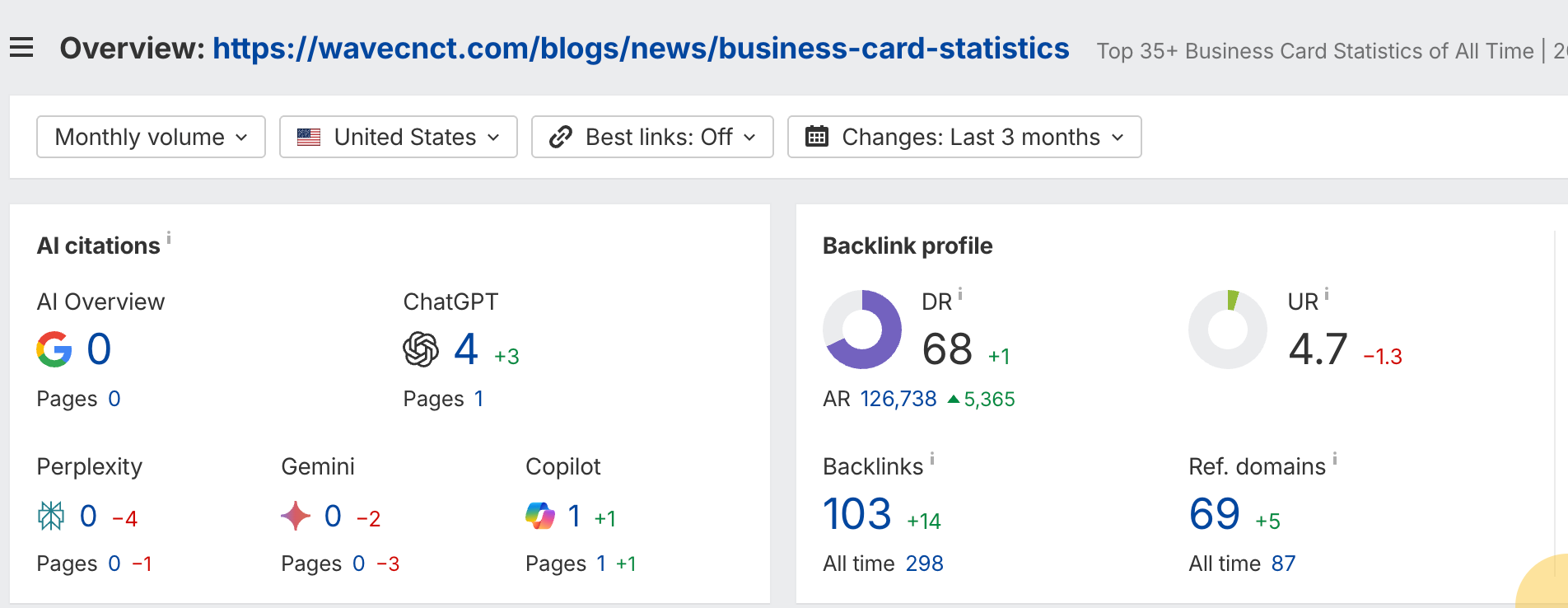
For this one, let me just show you a real example. We ran a targeted digital PR campaign for a SaaS client built fully around positioning the brand as a credible, citable source within its niche, which is exactly the kind of signal that compounds in both classic search and AI-driven answers. We made linkable assets, like a deep and detailed statistics page for digital business cards (their main business focus), and as a result got 103+ organic links and 69+ referring domains just from that one page.
Then we also did a study on one of the related booming topics at the time, remote work - did deep research, found reliable data, and created the list of top cities for remote workers in the US. That page also spread like wildfire. We got links and brand mentions from MSN, Yahoo News, Miami Herald, and more nationwide outlets with millions of audience, plus 20+ regional publications across the US.
In terms of numbers, 36 direct backlinks were secured, all from genuine editorial coverage, and after a few more weeks, the company started getting cited by AI, and clicks started to follow.
Plus, SaaS buyers research heavily before converting, and being the brand that keeps showing up as a trusted reference across the buying journey is a direct commercial outcome.
This shows that although through a seemingly longer cycle (but in fact, a more effective one), digital PR brings the results businesses need.
If you want the full framework for connecting campaign activity to business outcomes, I wrote up our approach for measuring your digital PR campaign.
Hype vs. Growth Comes Down to Execution, Not the Channel
Here's the reframe I'd push back on the original question with: a better question than "is digital PR the future or hype" is "are you doing digital PR, or are you doing link building wearing a PR costume?"
Teams that treat it purely as a link-building tactic - generic surveys, mass outreach, no brand strategy, no journalist relationships - get diminishing returns, burn out their media contacts, and conclude the channel doesn't work. They're not wrong that what they did didn't work.
Teams that treat it as a growth channel - integrated with SEO, content, and brand strategy, measured against traffic and commercial pages, built on real relationships rather than spray-and-pray pitching - see compounding results over quarters.
Digital PR is earned media, and earned media has always compounded slower and lasted longer than paid. That hasn't changed. What's changed is how much more search and AI systems now reward it.
A good example of this discipline in a genuinely tough, high-competition vertical is our casino digital PR case study - igaming is one of the hardest spaces to earn coverage in because journalists are (rightly) cautious about gambling-adjacent content, so generic pitches get ignored instantly. What worked was building campaigns around genuinely newsworthy angles rather than product promotion, which is the same discipline we apply across our igaming digital PR services. If it works in one of the most skeptical media environments out there, it's an effective method.
Where The Skeptics Are Still Right
I don't want to oversell this, because overselling is exactly what got digital PR a hype reputation in the first place.
- It's genuinely slow. Expect months before you see compounding SEO impact. If you need results by the end of the quarter, pair it with faster channels.
- It only works with a real story. No amount of tactics fixes a boring pitch. Data, a genuine angle, and good timing still beat volume of outreach every time.
- Full attribution is still imperfect. Brand lift and unlinked mentions are real, but they're harder to put in a spreadsheet than a backlink count. Be honest with stakeholders about that instead of forcing a number that isn't there.
If a campaign is competing in a noisy news cycle, timing and framing matter even more than usual.
The Verdict
Digital PR is the future of marketing because it produces exactly the two assets that both search engines and AI systems are increasingly built to reward: genuine third-party validation, and a citable, trusted brand presence across the web. As search keeps shifting toward AI-generated answers built from cross-referenced sources, that positioning only gets more valuable.
The hype is in the agencies running it like it's 2015 and calling it something new. If you want to see whether it's being done properly, that's a fair thing to ask any agency to show you, including us.
Let’s have a conversation over a free strategy call, and do your digital PR planning the way it will work for your niche.

