



Digital PR cuts through a crowded news cycle by giving journalists something more useful than another announcement: real-time commentary on stories already breaking, data they don't have time to gather themselves, and access to niche or local outlets that aren't drowning in the same pitches as national press.
From our digital PR agency’s experience, I can say that the fastest responders, the quotables, and the best-prepared ones are the winners in this game. Let me show you how you can be one of them.
Why Crowded News Cycles Bury Most Pitches
Newsrooms are covering more ground with fewer reporters than they were a few years ago, and journalists' inboxes are already flooded with generic pitches on a quiet week. When a major story dominates the cycle, that gets worse. Your product update or quarterly milestone is now competing with war coverage, market volatility, or whatever celebrity story is trending that hour, and it rarely wins on its own merits.
That's not a reason to go quiet. It's a reason to pitch differently. If you want the fundamentals first, we've covered what digital PR is and how it works in more depth elsewhere. This piece assumes you've got the basics and want the specific playbook for getting covered when the news cycle won't make room for you.
The 6 Digital PR Tactics That Cut Through
These are the tactics we come back to on every account, crowded cycle or not. The only thing that changes week to week is which one carries the most weight.
1. Newsjack the Story Before Someone Else Does
Newsjacking means inserting your brand's data or expert take into a story while it's still trending. It's one of three pillars behind every digital PR campaign we run, alongside data-driven PR and expert commentary, because it gets coverage faster than a cold pitch ever could.
The process looks something like this: you watch what's breaking in your industry, decide fast whether you have something to add, and get it to the right journalist before the story moves on.
Platforms like HARO, Qwoted, and Featured surface live journalist requests. But also watch social media directly - the fastest opportunities often move quicker than any platform can index them.
Just as important is to know when to sit it out. If a story involves tragedy or crisis, jumping in usually reads as opportunistic. Ask whether your angle is genuinely relevant, or just attached.
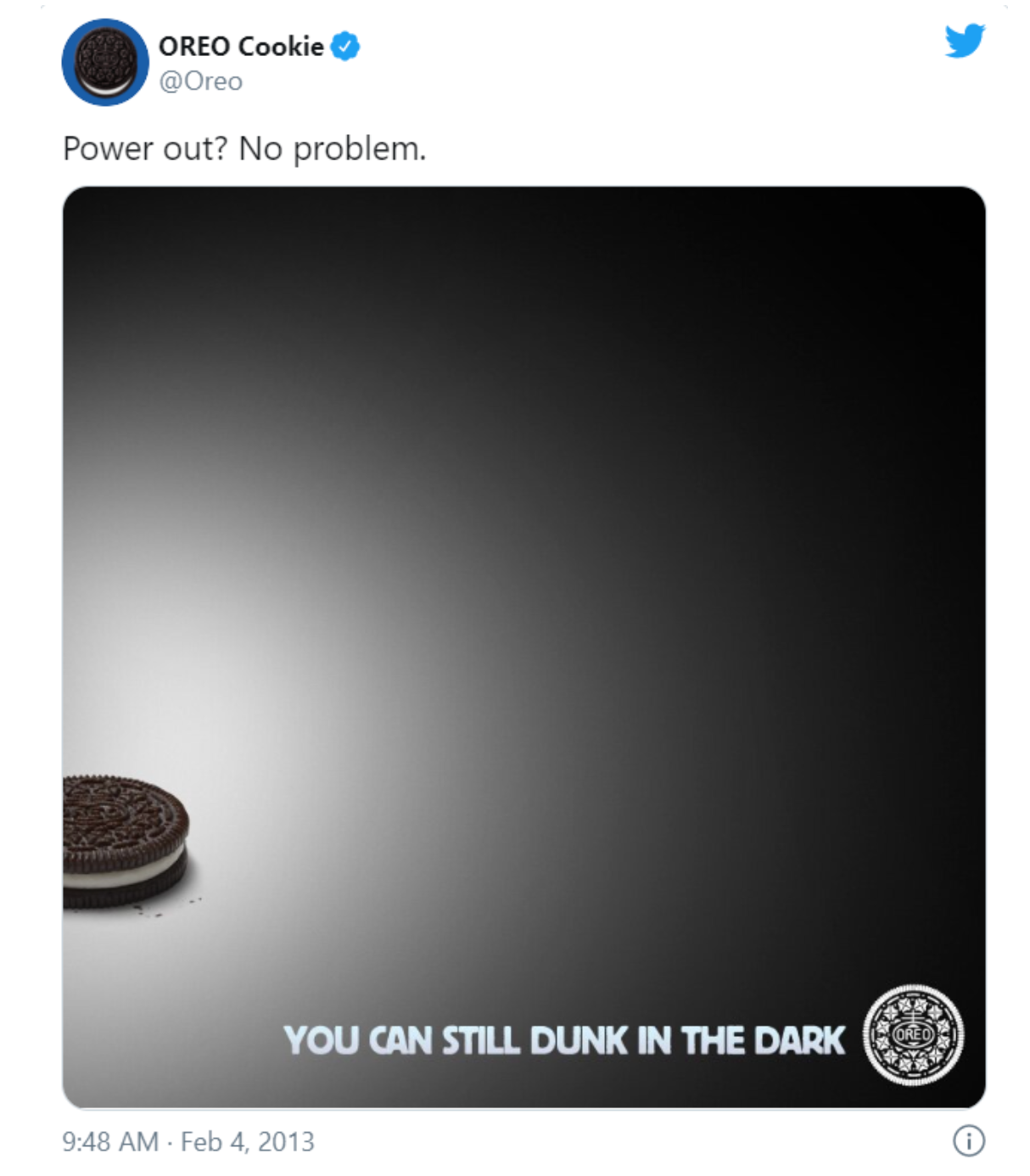
The best example of this wasn't even a PR campaign. It’s an old classic. When the lights went out at the Superdome during Super Bowl XLVII, Oreo's team posted live within minutes: "You can still dunk in the dark." Just a fast, sharp read on the moment that rode the wave of virality.
Treat this as a daily habit, not a one-off tactic. Whoever runs your PR should check breaking news in your industry every morning, the same way they'd check email.
2. Hand Journalists Data They Don't Have Time to Gather
Reporters are filing more stories with less time to research them than they did two years ago. Plus, AI has filled the online platforms with such fluffy and unreliable content that journalists are hungry for useful data.
Hand a journalist a clean, citable data point instead of an opinion, and you've done part of their job for them. That's why data-led pitches convert better than almost anything else.
To do this, you simply need a sharp read on public data like government stats, search trends, or your own customer data. It will work as long as the finding is specific and the method fits in one sentence.
One of our legal clients was competing for one of the toughest terms in their market: "criminal defense lawyer in Las Vegas." Instead of pitching the firm directly, we analyzed FBI crime data and ranked U.S. cities by how fast crime was rising. We customized the pitch by outlet: national publications got the full ranking, regional papers got their own city's numbers.
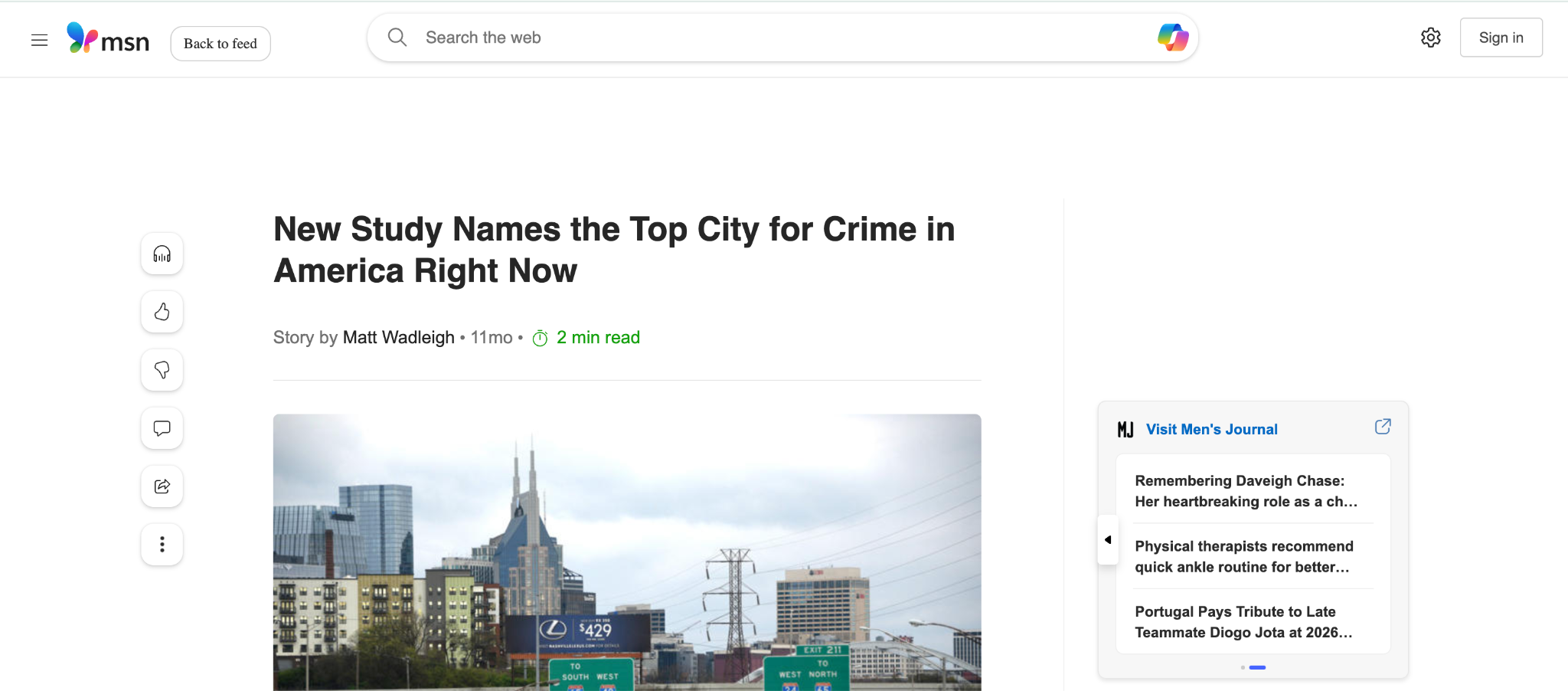
In a few weeks, we got 35 backlinks averaging a DR of 77 from outlets including Yahoo News, MSN, Men's Journal, and the Miami Herald. The full legal case study breaks it down further, but the idea was to look at public data from an angle nobody had considered before.
This is also the clearest way to see the difference between link building and digital PR: a link that a journalist gives you because your data earned it means more than one you negotiated.
3. Go Where the Inbox Is Less Crowded (Trade, Niche & Local Press)
While every brand is pitching the same five national outlets during a big news week, trade publications and local press sit comparatively quiet. A niche industry title or regional paper won't get you the numbers a national hit does, but it reaches an audience already primed to care. Plus, it's easier to land while everyone else is fighting for the same headlines.
There's a compounding effect here too: the research that earns one national placement often gets picked up by a long tail of regional and trade outlets running their own local angle. It's common to see one headline hit followed by twenty-plus smaller regional pickups. Those smaller wins build the relationships and credibility that make your next pitch land faster.
4. Strengthen Owned Channels While Earned Media Is Noisy
Owned channels are the platforms you fully control: your blog, email list, social accounts, and website. When the news cycle is too chaotic for pitches to land cleanly, this is where you should keep building.
Evergreen content is the clearest payoff here. A well-built data campaign doesn't have to be a one-off.
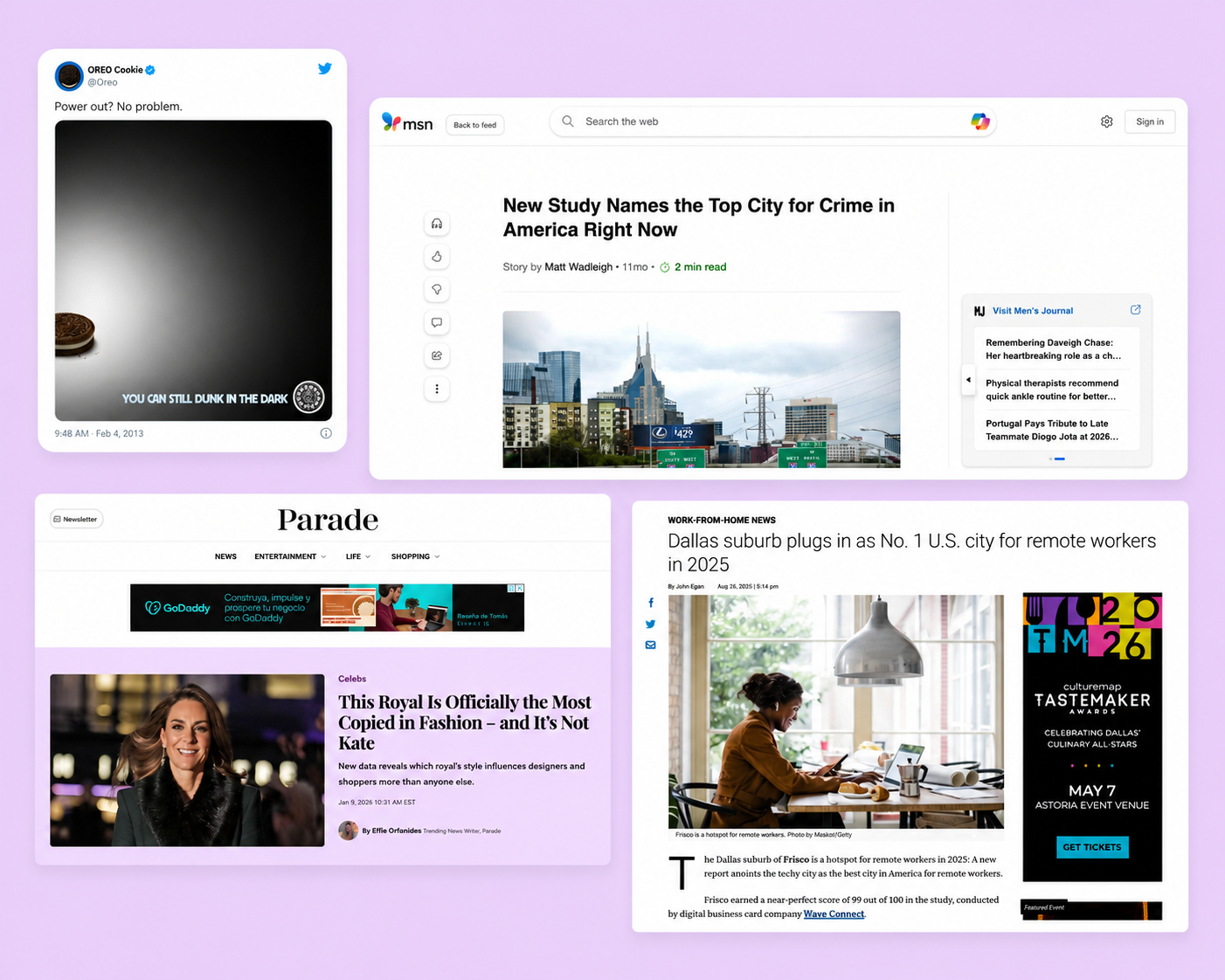
For an ecommerce fashion client case, we built a global ranking of royal style influence, using search volume, social engagement, and online photo counts instead of opinion. Prince William topped the list, ahead of Princess Diana and Kate - an unexpected result that got picked up by Cosmopolitan, Marie Claire, Parade, and outlets across the UK, France, and Italy.
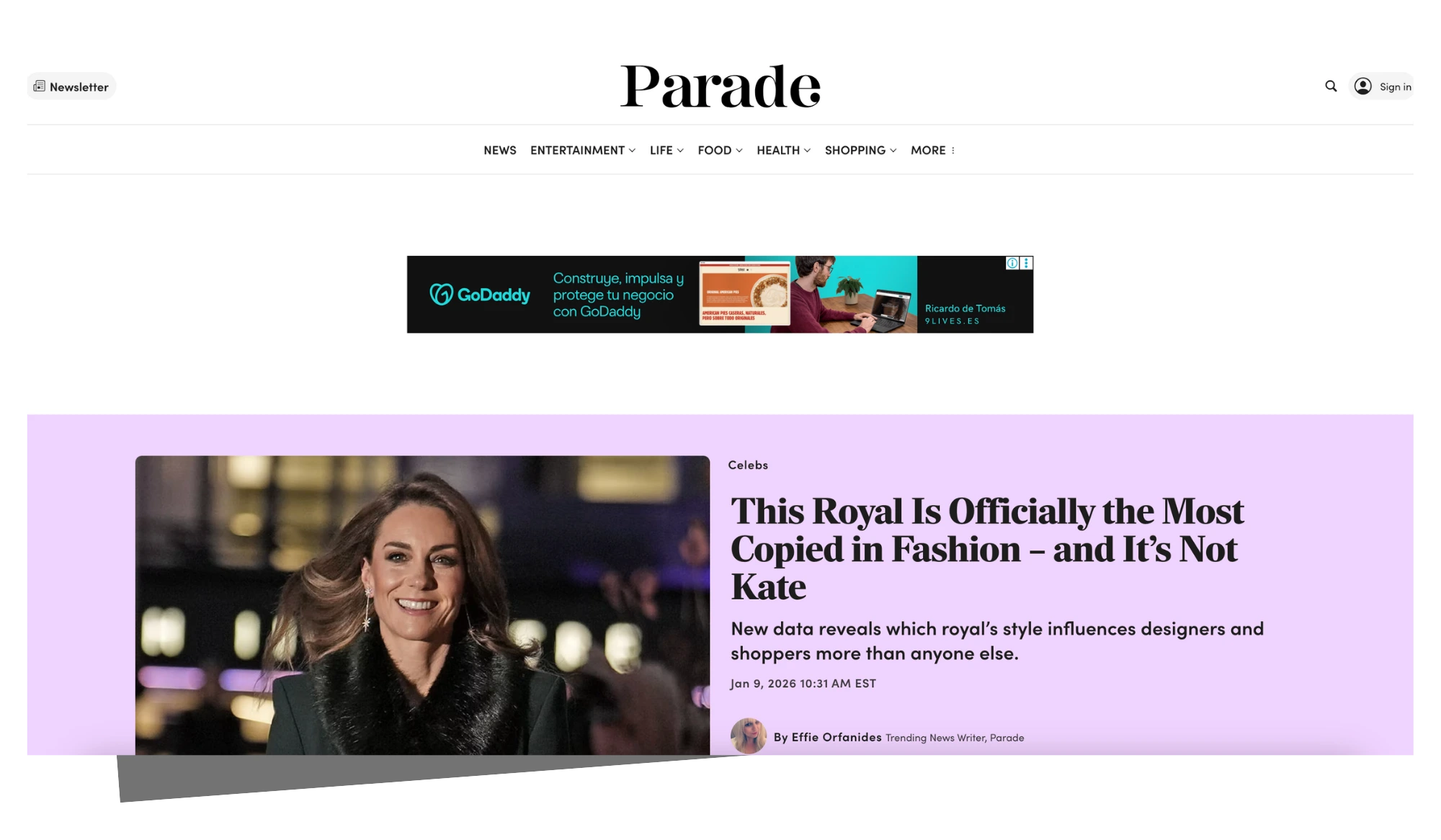
The format itself became the real asset: designed to be refreshed and repitched every season instead of retired after one news cycle.
Why digital PR matters so much for SEO explains why this owned-and-earned combination keeps paying off long after the coverage fades.
Social proof belongs in this bucket too. Reviews, testimonials, and user-generated content won't earn you a headline, but they quietly build the trust that converts the traffic your other tactics send your way. When a crowded cycle makes earned coverage harder to land, this is the channel that doesn't care what's on the front page.
5. Build Journalist Relationships Before You Need One
This is something we are really proud of - our long-standing journalistic network in various niches, markets, countries, and high-level publications.
No algorithm replaces a journalist who already trusts your judgment. This trust is built through months of being a reliable, specific source before they needed it.
That groundwork pays off twice. First, it earns you the benefit of the doubt when your timing is off - a journalist who trusts you will take the call mid-chaos. Second, it makes you the default source next time their beat needs a quote, crowded cycle or not.
For one SaaS client’s case, a digital business card platform, the goal was a credible voice in the ongoing remote-work conversation. We built a data-backed ranking of the best U.S. cities for remote work. Frisco, Texas beat San Francisco and New York for the top spot - exactly the kind of counterintuitive finding that makes a reporter want to call you again.
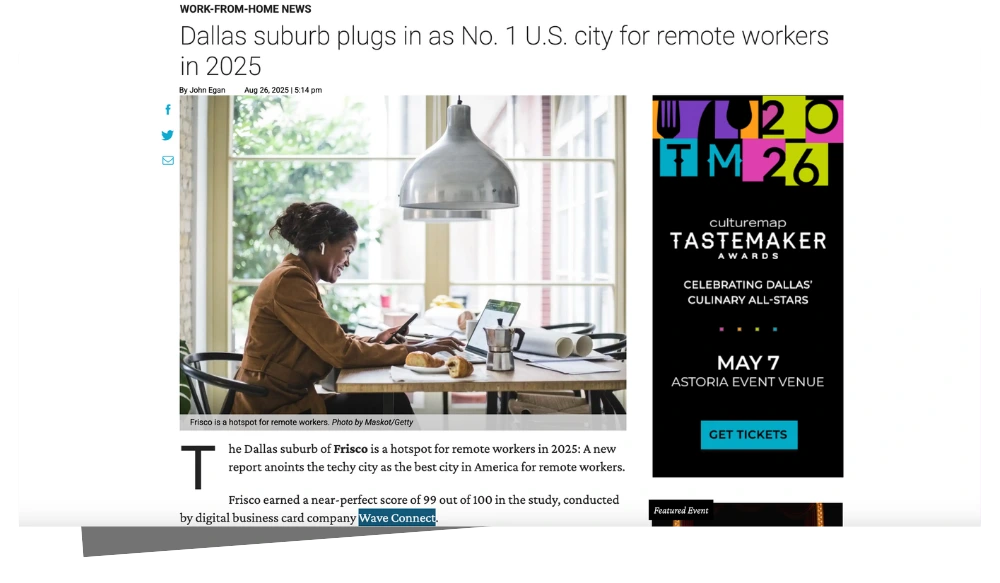
The bigger win of this campaign was what it did for the next pitch, and the one after that.
6. Make the Story Citable by AI as Well
AI Overviews, ChatGPT, and Perplexity now answer a growing share of the questions your future customers used to type into Google. And these tools cite the brands that credible third parties have vouched for, aka results of your digital PR.
Everything above already builds toward it. A data-backed finding that earns a journalist's citation is the same asset an AI model treats as a primary source. An expert quote sharp enough for a reporter to use is exactly what these systems pull as commentary. None of this needs a separate strategy bolted onto your PR plan.
We go deeper on this in our breakdown of digital PR for GEO, including how to measure whether ChatGPT or Google's AI Overviews are citing you. Worth a read if AI visibility is on your radar this year.
How to Tell Digital PR Is Working
Track timing. During a crowded news cycle, watch coverage velocity — how fast you got picked up relative to when the story peaked. A placement while the news is hot is worth more than the same placement a week later.
Beyond that, the usual metrics still apply:
- backlinks and their DR,
- referral traffic to the pages you care about, and
- brand mentions, linked or not.
Add one newer one: AI citation tracking. Tools like Profound and Peec AI now show whether ChatGPT, Perplexity, and AI Overviews cite your brand, increasingly as useful as a rank tracker.
A quick example of velocity in action from our experience.
For a casino client, we ran a study to test 10 AI chatbots for reliability. ChatGPT came out least reliable; an underdog model came out on top - surprising enough that Elon Musk shared it himself, and most of the 67 resulting links and mentions landed within days of that share. Outlets like Euro News and CoinMarketCap picked it up fast, while the campaign later started showing up in AI citation tools too, full circle for a study about AI. Full breakdown in the casino case study.
Same playbook as the campaigns above, just adapted to a niche where coverage is harder to earn. Worth planning for if you want digital PR for iGaming or similar restricted industries.
Mistakes That Get a Pitch Ignored
A few patterns kill coverage during a crowded cycle almost every time:
- Forcing your brand into a story that doesn't fit, just because the story is trending.
- Pitching in the first 24 hours after a tragedy or genuine crisis. Wait it out, or skip it entirely.
- Sending the same generic pitch to fifty journalists and hoping volume makes up for relevance.
- Having no follow-up system, so a "maybe later" from a journalist just disappears.
- Going quiet on every owned channel because PR is treated as the only lever that matters, then having nothing to point to when a journalist asks what else you've got.
None of these are exotic mistakes. They're the default behavior of most brands under pressure to get something out the door, and they're exactly what separates a pitch that lands from one that doesn't.
Key Takeaways
A busy news cycle just means the bar for relevance is higher. The brands that keep getting covered do a few things well: they read the room fast and newsject responsibly, they bring data instead of opinions, they go after outlets nobody else is fighting over, and they show up often enough that journalists, and now AI engines too, already know them before the next pitch even lands.
It's the same playbook we run for our clients in law, ecommerce, SaaS, iGaming, and other industries. We just point it at whatever's dominating the headlines that week. So, if you want support, just contact us and let’s have a free call to discuss it.
Frequently Asked Questions
What is newsjacking?
Newsjacking is inserting your brand, data, or expert commentary into a news story that's already trending, while it's still trending, rather than waiting to make your own announcement.
How is digital PR different from traditional PR during a crowded news cycle?
Mostly speed. A reactive digital PR campaign built around breaking news can be pitched, placed, and live within 24 to 48 hours. Traditional PR's planning cycles, often weeks for a print feature, make it structurally unable to respond while a story is still moving. We cover every other difference between traditional and digital PR in detail in our guide.
How fast should you respond to a breaking story?
Hours. By the time a story is 48 hours old, most outlets have already moved on to the next angle, and a "fresh" take at that point usually reads as stale.
What tools help monitor breaking news for PR opportunities?
Platforms like HARO, Qwoted, and Featured surface live journalist requests. Pair those with direct social monitoring of the reporters and outlets you already track, since the best opportunities often move faster than any platform can index them.
Personally, our team and I actively use social media monitoring.
Can a small business do this without an agency?
Yes. Journalists care about the strength of the story, not the size of the company behind it. A sharp, well-timed local or niche angle from a small business often outperforms a generic national pitch from a much bigger brand.
How long do crowded news cycles usually last?
It varies, but most major stories dominate attention for a few days to a couple of weeks before the cycle fragments again. Plan reactive pitches for the first 48 to 72 hours, and save anything slower-moving for an owned-channel or evergreen angle instead.

