



What I Wish I Knew Before Starting in Digital PR (From a CEO Who's Been There)
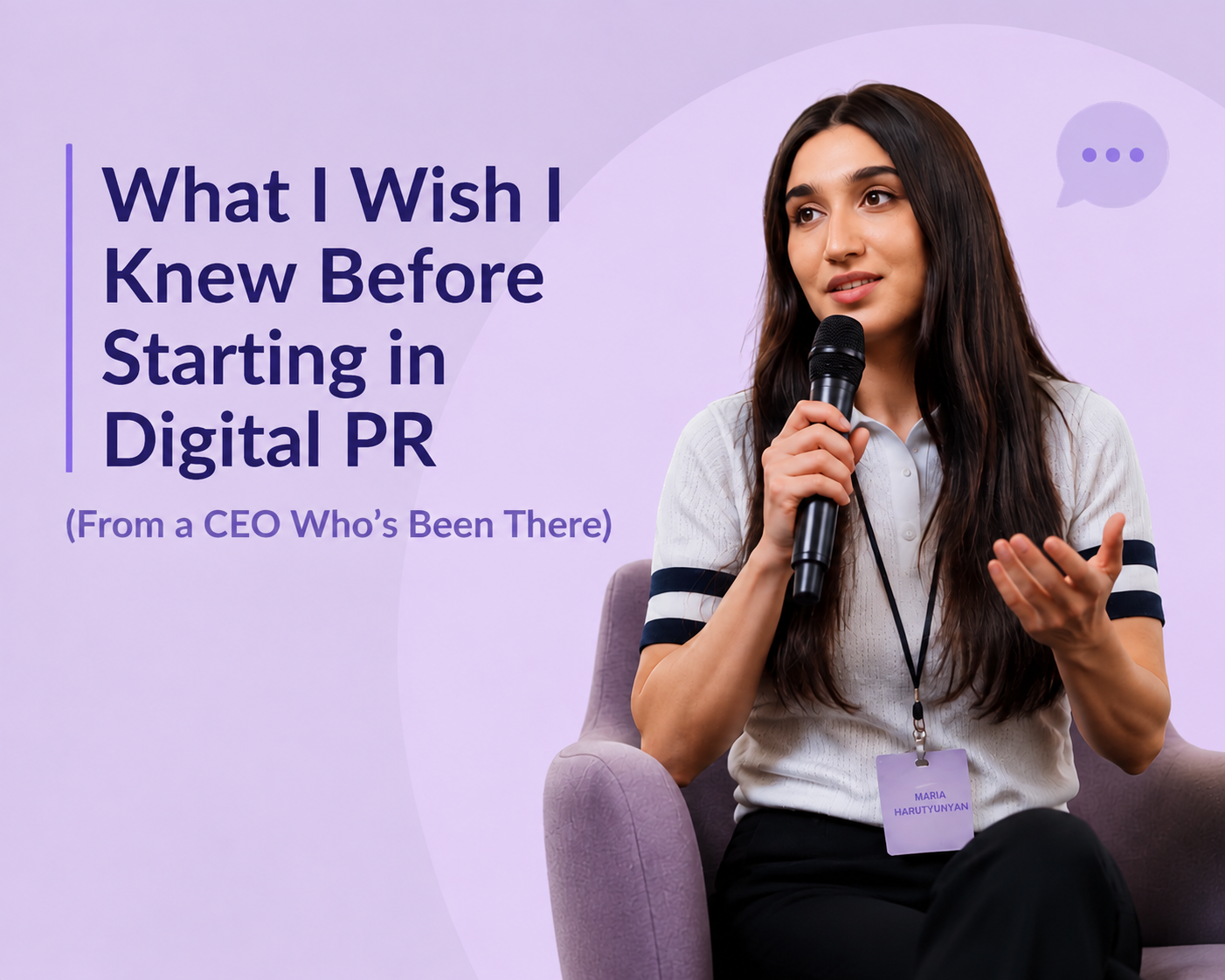
I am Maria, the co-founder of the Digital PR Agency. I started my first-ever digital PR company back in 2018, before AI, before the industry became crowded, and when SEO and journalist outreach worked by a different set of rules. I’ve seen the industry merge and rebuild itself many times, and I know what it’s like for someone who’s just starting out, or even restarting.
There are a lot of lessons you learn along the way, but these are the main ones at the very beginning that I really wish somebody told me:
- Build relationships with journalists
- Consider rejections a baseline
- Manage client expectations correctly
- Measure your results the right way
- Don’t get comfortable because the industry’s moving fast
I have a lot more below.
These might sound like notes from my midnight diary, but there are more specific tips and methods I learned under each one. So, I’ll just tell you what I’d tell myself if I were starting today.
The Lessons I Wish I’d Known From a Digital PR CEO
Pitch with Data and Headlines in Mind
When I was just starting out, I thought I needed a clever angle, a clever title, to win over a journalist and get them to write what I wanted. But later every journalist in my network shared that what they're looking for is something they can make a headline out of. And that's usually something based on statistics, surveys, data, a number nobody else has.
I started focusing on plain, unglamorous data points and using them in my pitches. And, voila, the response rate went up! The main difference was that I always brought up the number first.
Now, if I were to start again today, I would focus on how I present the data. There is a lot of data available now, but there are official data points that are still hidden, or that everybody knows but hasn't interpreted differently. Or at the right time. So that builds your hook. The way you are incorporating and interpreting the data is what makes it work.
To give you an example from my team, one of our law firm clients wanted links from trusted publications. We built an outreach around verified (and public) FBI data and used it as a hook.
Crime is always one of the most discussed topics, but it's usually recycled news or similar information- nothing new. So, we found FBI crime statistics that covered major U.S. cities and ranked them by total crime rate over recent months. The team structured it into categories such as violent crime, property crime, accidents, and others. As a result, we received something structured, something that everybody wanted to read, that journalists wanted to cover. So, we made sure our pitch showed the journalists that our data can make headlines.
Be Prepared to Be Rejected
Most of your pitches will be ignored. That was true back in the day, and it's true today. If anything, it's more true now because every inbox is drowning in all-the-same AI-generated pitches. You will easily be lost in the inbox or get rejected. That's fine. Accept it as a fact.
We received thousands of rejections back in the day. Don't take it personally. Send the next one away with the right format. Specifically focus on how digital PR can cut through crowded news cycles, with greater precision in targeting the right journalist audience.
Build Relationships from Day 1
One of the most valuable and long-lasting things I built was my relationships with journalists. They never lost value and always add value because you have a group of professionals who trust you enough to always open your email, redirect you to the right people, and take your calls.
I've seen enough Google updates, placement fluctuations, and LLMs appearing and constantly changing their algorithms to know they are not constant. I know that when we go into digital PR, one of the metrics we value is placements and backlinks to the pages. But placement in digital PR is a byproduct.
It is also not a coincidence how trust signals in digital PR work on the search side and EEAT, too. If your relationships are strong, you’ll have a lower baseline for rejection than I mentioned above, and in the long run, it helps make your work more efficient.
Brand Authority is a Better Prize than Number of Backlinks
Early on, I was super obsessed with domain authority scores. I took almost any link that could help increase DA. I don't think that way anymore. It's more important to be mentioned in a smaller publication your customers read and value than in 10 links to seemingly high-authority, industry-related sites that your target audience would not visit. Yes, digital PR matters for SEO, and we want to see those numbers quickly, but they are just related; they are not the same game.
It's a really expensive mistake to chase link counts and lose them with the next Google update or LLM algorithm change.
Manage Client Expectation from Day 1
Accept the fact that you will need to explain to your clients that digital PR compounds month over month. This is the most common conversation I have to this day.
Set the right expectations at the first meeting, because if not, you'll spend the rest of the relationship managing disappointment and feeling anxious about delivering unrealistic results, instead of doing your work and maximizing those results. When you do get the results, be ready to show them. Measure your digital PR campaigns correctly, and show it to clients in a simple, understandable (for them) way.
You Won’t Always Be Underpaid and Overworked
I will not sugarcoat this one. Early in this career, you will likely earn less than you're worth, but you're also learning and just developing your relationships. At least that was true for nearly all of the digital PR founders and me who are colleagues and friends. It's still true for most people starting out in agencies today. But it doesn't last forever. If you're good and stick with it, you'll make it out.
Impact Is Not Impressions and Mentions
“How many mentions did I get?” This was basically the only question clients asked me when I first started working with them. And I don't answer it anymore.
In the same tone I use to manage their expectations about timelines, I also draw their attention to what's more important. In our line of work, organic traffic generated by digital PR-driven content, branded search, and coverage that puts you in front of prospects and increases lead volume and revenue are the most important things. So I measure my results with that, and I focus my clients' expectations on that as well.
You'll see a lot of professionals now focus on how many thousands of mentions they got, but at the end of the day, that's just nice-looking noise in the report. And your clients will not stick with you for long if you don't deliver tangible business results. Digital PR is a brand-building tool, and you need to position it like that.
Use Tools, But Rely on Your Judgment
I've used monitoring programs and digital PR tools that no longer exist, seen entire categories of software replaced by AI features, and know some that will not exist in two years. That change is constant, and what should also be constant is your judgment. Knowing which story is newsworthy, which journalist cares, what data is more likely to land at specific times. AI can really help you draft faster, find X, Y, Z more easily, and do your research more productively, but it cannot make the call the way you can (yet).
Search Is Change And Will Change Again
This is my newest lesson, but if I were starting today, I'd want to know this.
I didn't see this coming years ago, but people are constantly changing the way they get their answers. It’s AI overviews, chatbots, and in a few years, you never know what will be their alternative. That doesn't make digital PR any less relevant, and I don't want you to feel less confident in your decision to do digital PR. It just makes the fundamentals more important. Because being the source the AI model cites currently requires the same trust signals that once earned you backlinks. So, digital PR currently is an active engine for GEO.
If You’re Starting Digital PR Today, Read This
Let me also give you a set of rules you can save to your Notes app and revisit constantly:
- Train your instinct of spotting genuinely newsworthy angles without using any tools.
- Read the works of journalists you are pitching to before you start the pitch. Have their recent work in mind.
- Get comfortable with the word “no” in writing, by strangers, on a weekly basis. It will become your favorite word.
- Always track branded search growth and organic traffic from your coverage.
- Set the right client expectations about your timelines before you send the pitch, before anything happens.
- You can use AI to speed up drafting research, but never choose your angle or write the final pitch with AI.
- Make your relationship tracking tangible. Build one real relationship with one real journalist before you think about scaling to 50.
- Don't treat all the brands you work with the same. Scaling digital PR across a multi-brand portfolio is a distinct skill and requires dedicated attention to each client and their niche.
A Note on Niche Industries
Digital PR is really different depending on the industry you're working in. That's something that took me way longer to learn than it should have. There are really heavily regulated spaces, like iGaming, that need completely different attention, different publications, different compliance considerations, and a different definition of what an impact or a victory looks like. So you shouldn't go into working with clients in such industries without doing your due diligence and learning about their compliance issues and what it's like to be them in the digital space.
Let me give you a clear example. We've done iGaming digital PR for many clients, including an online casino. And if you've ever worked with one in a PR page, you know that it's not really easy to get yourself, your name out there in a positive PR light. So what we did was go for the data and whatever was trending. At the time, AI chatbots were the ones really capturing people's attention. The whole online sphere was debating which AI chatbot was the best.
So we built a reliability study for this online casino website client - took the top 10 major chatbots, analyzed their hallucination rates, downtime, consistency of response, and other important metrics. We found that Grok is the leader in terms of the lower number of hallucinations, and ChatGPT had the most hallucinations. Headlines were ready.
As our client was in a similar tech space, this study, cited on high-authority tech publication pages, would bring them DR points and backlinks. What we didn’t account for was social virality, but even that happened.
Elon Musk shared the study. The information spread across LinkedIn, YouTube Shorts, and TikTok, and editorial coverage went crazy. So AI chatbots weren't our clients’ line of work, but they’re in the same sphere, so all we needed was to be creative and rely on data.
Prepare yourself for this. Develop the muscle of noticing clients’ opportunities from afar.
Common Questions About Starting in Digital PR
Is digital PR a good career to get into right now?
Yes. Just keep in mind that you will need to keep learning because, like any other marketing direction, this is changing really fast. But the barrier to entry is honestly lower than it was when I was starting out. So if you have genuinely good results, you have a high chance of succeeding.
Do you need a journalism background to work in digital PR?
No, but you need to understand how journalists think and understand what makes something newsworthy. That's a really important skill if you want to work in the industry.
What tools do digital PR professionals use day to day?
A mix of media databases and monitoring programs, SEO tools for backlink tracking, increasingly AI tools for drafting and research, and relationship management tools for working with journalists. In general, a mix of all of those tool types.

