




Over 70% of consumers verify brand credibility through multiple digital sources before believing an advertisement in 2026and that makes digital PR essential for healthcare, legal, finance, SaaS, e-commerce, iGaming, and local services. Let’s go deeper into these niches and better understand their connection to digital PR.
Why Is Digital PR Non-Negotiable in 2026
Google's AI Overviews and tools like ChatGPT, Perplexity, and Gemini don't take a brand's word for anything. A homepage claiming "the most trusted provider" is not evidence. So AI models do what any careful researcher would do - they look for a third party confirming it. A journalist covering you. A publication linking to you. An expert quoting you. That's what digital PR is: the practice of earning that third-party validation.
Digital PR earns backlinks the same way traditional press coverage always did - through a story or a piece of research a journalist wants to publish - but those links now double as the citation signals AI models use to decide who to trust.
If you're still treating digital PR as separate from your SEO strategy, or as a nice-to-have next to paid and owned media, that's the gap AI search is exposing fastest.
Not every industry feels this pressure equally, though. The niches below are the ones where skipping digital PR means becoming invisible in the exact moment a customer is deciding who to trust.
Business Niches That Cannot Neglect Digital PR
Let me give you a list first, and then go into each one in more detail:
- Healthcare & Telehealth
- Legal Services
- Financial Services & FinTech
- SaaS & B2B Software
- E-commerce & DTC
- Online Gambling & iGaming
- Local Service Businesses
Healthcare & Telehealth
Why you can't skip digital PR here: Health decisions carry real consequences, so AI models are deliberately conservative about which sources they'll surface for medical queries.
What effective PR looks like here:
- Original research or survey data tied to a health topic your audience searches for - the kind of study a health journalist can report on without having to verify it from scratch
- Expert commentary secured in wellness publications and trade press, attributed to a named clinician or founder
- Citations in outlets with genuine editorial standards, not pay-to-play directories
Proof signal: AI models weigh citations from publications with recognized editorial and medical review processes far more heavily than brand-published claims. This is E-E-A-T in its purest form - Experience, Expertise, Authority, and Trust - and healthcare is the niche where Google and AI enforce it hardest.
Legal Services
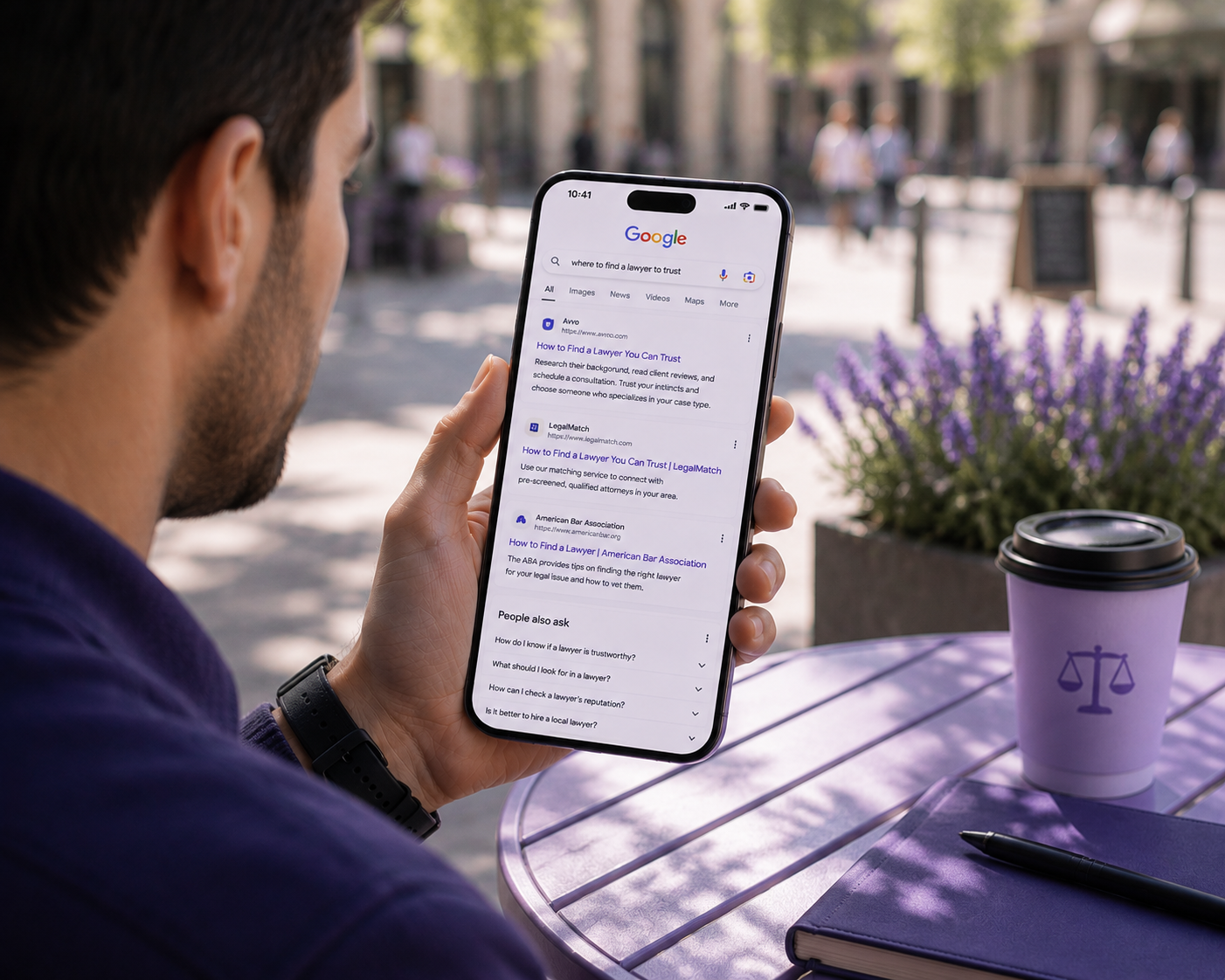
Why you can't skip digital PR here: People increasingly ask AI tools to recommend a lawyer the same way they'd ask a friend. Outside of AI search, people trust legal advice and service only from those who have a third-party endorsement. So, law firm digital PR becomes the most effective way to build it.
What effective PR looks like here:
- Data-driven research tied to your practice area, pitched to national and regional press
- Commentary secured in legal trade publications and mainstream news
- Coverage that positions a named attorney as the expert voice on a specific issue, not just the firm as a brand
Proof signal: We tested this directly with a law firm client competing for one of the most contested terms in the legal space - "criminal defense lawyer in Las Vegas." Instead of pitching the firm, we built an original study using FBI crime data, ranking major U.S. cities by crime rate. That gave editors something they could publish without fact-checking it themselves, and it worked: the campaign landed 35 backlinks averaging a domain rating of 77, including placements on Yahoo News (DR 94), MSN, Men's Journal, and 20+ regional outlets like the Miami Herald and Kansas City Star.
Financial Services & FinTech
Why you can't skip digital PR here: Finance, investing, and crypto sit in one of the most heavily scrutinized categories online. AI models are explicitly cautious here for the same reason Google is: bad financial information causes real harm, so generic or unverified content gets deprioritized fast.
What effective PR looks like here:
- Proprietary market data, trend surveys, or original analysis released on a regular cadence, not a one-off
- Expert commentary placed in financial trade press and major business outlets
- A consistent presence in the news cycle around whatever your category is reacting to - rate changes, market shifts, regulation
Proof signal: Financial publications linking back to your domain do double duty - they drive direct referral traffic and signal to AI models that your brand is part of the credible conversation in your category, not an outsider making noise.
SaaS & B2B Software
Why you can't skip digital PR here: The SaaS and B2B market is saturated, and paid acquisition costs keep climbing. Standing out on product features alone rarely works anymore when every competitor claims the same thing.
What effective PR looks like here:
- Original research tied to your category - usage data, industry trends, or a study your buyer persona would genuinely want to read
- Targeted placements in niche trade media, where the audience is smaller but far more qualified than a mass-market outlet
- A steady cadence of coverage, not a single spike - this is part of how digital PR cuts through an increasingly crowded news cycle rather than getting lost in it
Proof signal: For a SaaS client in the digital business card space, we built a study ranking the best U.S. cities for remote work, scored across nine factors like salary, internet speed, and cost of living. A Dallas suburb beat San Francisco and New York! And that became our newsworthy hook. The campaign brought in 36 backlinks at an average domain rating of 77, including two placements on Yahoo News, three on MSN, and coverage across 20+ regional U.S. outlets.
Earning backlinks like this from DR 70+ sites is one of the fastest ways to shift both organic rankings and how AI models perceive your category authority — but it only works with a real anchor text and linking strategy behind it, not links thrown in wherever they fit.
E-commerce & DTC
Why you can't skip digital PR here: Consumers are fatigued by polished, AI-generated ads and increasingly skeptical of brand-authored product claims. They - and the AI tools they now ask for recommendations - trust independent coverage over advertising.
What effective PR looks like here:
- Data-led campaigns tied to a topic your audience already cares about, built to be genuinely newsworthy rather than a thinly disguised product pitch
- Placement in gift guides, review sites, and lifestyle or niche media that your buyers read
- Global-reach stories when the brand or product has an angle that travels beyond one market
Proof signal: We saw this play out for an e-commerce client where the brief was simple: build brand authority through coverage in the outlets their customers already read, with no paid placements. We built an original ranking of royals by style influence, using real search and social data - a topic people had opinions about but nobody had measured.
The unexpected result (Prince William outranking Princess Diana and Kate) was the story. It landed 26 backlinks at an average Domain Rating of 88, including Cosmopolitan, Marie Claire, Parade, MSN, Yahoo News, and international coverage across France, Italy, and Taiwan - putting the brand in front of fashion audiences on multiple continents from a single campaign.
This is the brand-building power of digital PR in practice: one well-built story, repeatable in future seasons, doing the work that months of paid ads couldn't.
Online Gambling & iGaming
Why you can't skip digital PR here: Gambling and betting sit among the most heavily regulated, most heavily scrutinized categories online - both by search engines protecting users from risk, and by AI models applying the same caution they use for finance and health. Generic affiliate content and thin brand pages get filtered out almost by default.
What effective PR looks like here:
- Original research tied to a broader, currently relevant topic - not just "best casino" content, which AI models are specifically trained to be wary of
- Coverage that reaches beyond gambling-specific press into mainstream tech, news, and social platforms
- Content built for shareability across social and video platforms, where virality itself becomes a trust and distribution signal
Proof signal: We put this to the test for a casino client with a study that had nothing to do with gambling on the surface: a reliability ranking of the ten major AI chatbots, scored on hallucination rate, consistency, and downtime. The finding that ChatGPT - the most-used AI tool in the world - ranked as the least reliable for workplace use was the kind of counterintuitive result that spreads on its own.
The campaign generated 67 links and mentions across news, social, and tech media, including a share from Elon Musk himself on X. It's a clear example of how a brand in a restricted category can still earn mainstream authority by publishing research adjacent to, rather than directly about, its core product.
For operators in this space specifically, we've built out a dedicated iGaming digital PR approach built around exactly this kind of category-adjacent, compliance-aware campaign strategy.
Local Service Businesses
Why you can't skip digital PR here: This is the niche most people underestimate. When someone asks an AI tool for "the best dentist near me" or "a reliable plumber in [city]," the model is pulling from reviews, local citations, and third-party mentions - not just your Google Business Profile. Brands with no presence beyond their own listing routinely get left out of the answer entirely, even when they're the better option locally.
What effective PR looks like here:
- Local and regional press coverage tied to community relevance, not just self-promotion
- Consistent citation and review signals across the platforms AI models pull from
- For multi-location or franchise businesses, a coordinated approach so authority is built across locations without diluting any single one - this is the exact challenge covered in linkbuilding for multi-brand portfolios
Proof signal: Consistency matters more than volume here. A handful of credible, relevant local mentions built steadily over time outperforms a single burst of coverage that goes quiet.
Comparison Table: Digital PR Priority by Niche
Is Your Niche One of Them? A Quick Self-Check
If your industry isn't listed above, run it through these questions:
- Does an AI tool or Google filter and verify claims in your industry before recommending a provider? (Healthcare, legal, and finance all do this aggressively.)
- Is trust a genuine blocker to purchase, not just a nice-to-have? If customers research heavily before buying, PR matters more.
- Is your market saturated with brands making similar claims? The more noise, the more third-party validation stands out.
- Would a journalist, not just your marketing team, find your story genuinely worth covering? If yes, you have a digital PR opportunity sitting unused.
If you answered yes to two or more, digital PR is the fastest lever you're not pulling in 2026.
The Bottom Line
Every niche on this list shares the same underlying problem: AI models and increasingly skeptical customers won't take a brand's word for its own credibility anymore. They want proof, and that proof has to come from somewhere other than the brand itself. That's what digital PR delivers, so all of them need digital PR.
If your business sits in one of these niches, the risk is already showing up in which competitors get named when someone asks an AI tool who to trust. Get in touch with us for a free strategy call before these risks affect you further, and let’s plan together.

